When people think about investing, one of the biggest fears they have is buying the wrong stock.
“What if I buy at the top?”
“What if the company performs badly?”
“What if I lose money?”
These are valid concerns, and they’re often the reasons why many people never get started in the first place.
However, after spending years investing in the stock market, analysing companies, and speaking with thousands of retail investors through my blog and at investor events, I’ve come to realise something interesting.
The biggest investing mistake isn’t choosing the wrong stock.
It’s never starting at all.
The Cost of Waiting Is Often Greater Than the Cost of Being Wrong
Many beginner investors spend months, or sometimes even years, trying to learn everything before making their first investment.
They watch countless YouTube videos, read dozens of articles, compare brokerage accounts, and constantly tell themselves they’ll start “when they’re ready.”
Unfortunately, that day rarely comes.
In the meantime, inflation quietly reduces the purchasing power of their savings, while the stock market continues to reward those who have remained invested over the long term.
Ironically, many people spend so much time trying to avoid making a mistake that they end up making an even bigger one, which is to allow precious time to pass without putting their money to work.
You Don’t Need to Be Right All the Time
Another misconception is that successful investors have an uncanny ability to pick winners consistently.
In reality, even some of the world’s most accomplished investors have made costly mistakes (the Oracle of Omaha Warren Buffett included).
The difference is that they don’t expect perfection.
Instead, they focus on building a diversified portfolio, managing risk sensibly, and staying invested over the long term.
One poor investment decision is unlikely to derail your financial future if you have a disciplined investment approach.
However, sitting on the sidelines for decades because you’re afraid of making a mistake can have a much greater impact on your long-term wealth.
Investing Is More About Behaviour Than Intelligence
When people think about successful investors, they often imagine someone with exceptional analytical skills, an ability to predict market movements, or access to information that others don’t have.
In reality, investing success is often much less glamorous.
More often than not, it comes down to having the discipline to stick to a sensible investment plan, especially when emotions begin to take over.
It’s easy to say you’ll invest for the long-term when markets are rising. However, the real test comes during periods of uncertainty:
Will you continue investing when your portfolio is down 20%?
Will you panic and sell after reading alarming news headlines?
Will you abandon your investment strategy in favour of the latest market trend because everyone else seems to be making money?
These decisions have a far greater impact on long-term investment returns than trying to predict which stock will outperform next.
Over the years, markets have consistently rewarded investors who remain patient, stay disciplined, and allow time to work in their favour, rather than those who constantly chase the next big opportunity or react emotionally to short-term market movements.
There Will Never Be a Perfect Time
Every year seems to present a new reason not to invest:
“Interest rates are too high.”
“Interest rates are too low.”
“There’s a recession coming.”
“Markets are at all-time highs.”
“There’s geopolitical uncertainty.”
“The economy is slowing.”
If you wait until every uncertainty disappears, you’ll probably never invest.
The reality is that uncertainty is a permanent feature of investing.
Successful investors don’t wait for certainty. Instead, they learn how to invest despite uncertainty.
Small Mistakes Can Be Fixed
One comforting thought for beginners is this: Very few investing mistakes are irreversible.
Bought the wrong stock? You can sell it.
Built a portfolio that’s too concentrated? You can diversify over time.
Invested too aggressively? You can gradually adjust your asset allocation.
Most mistakes can be corrected. Time, however, cannot be recovered.
Every year you postpone investing is a year of potential compounding that you won’t get back.
Compounding Needs Time More Than Perfection
Albert Einstein is often credited with calling compound interest the eighth wonder of the world. Whether or not he actually said it, the underlying principle remains true.
Compounding works quietly.
It doesn’t produce spectacular results overnight. Instead, it rewards consistency over long periods.
This is why someone who starts investing in their twenties, even with relatively modest monthly contributions, often ends up significantly better off than someone who waits until their forties despite investing much larger amounts.
The lesson isn’t that you need to make perfect investment decisions. It’s that you need to give compounding enough time to work.
Don’t Let Information Become Paralysis
Today, there has never been more free investing content available.
While having access to wealth of information out there is undoubtedly beneficial, it can also create an unintended problem – information overload.
Many aspiring investors jump from one opinion to another, constantly searching for the “perfect” strategy.
Before long, they’re overwhelmed by conflicting advice: Should they invest in ETFs? Dividend stocks? Growth companies? REITs? Global markets? Singapore? The US?
Eventually, that analysis turns into paralysis.
Instead of making progress and starting to build their investment portfolio, they continue researching indefinitely.
Confidence Comes From Taking Action
One of the biggest misconceptions is that confidence comes before action.
In reality, confidence usually comes after taking the first step.
No one feels completely confident before making their first investment – just as nobody learns to ride a bicycle by reading books alone, investing also requires practical experience.
You don’t need to know everything before you begin. All you need is a sensible framework, realistic expectations, and the willingness to keep learning along the way.
Closing Thoughts
If there’s one takeaway from this post, it’s this:
The biggest investing mistake isn’t choosing the wrong stock.
It’s allowing fear, perfectionism, or information overload to stop you from investing altogether.
Yes, making mistakes is part of every investor’s journey.
But those mistakes often become valuable lessons that help you become a better investor over time.
On the other hand, never getting started means missing out on years, or even decades, of learning, experience, and the powerful effects of long-term compounding.
If you’ve been thinking about investing but find yourself overwhelmed by the amount of information available online, having a structured learning path can make the journey much less intimidating.
A friend of mine, Dinah Poehlmann from YourFinanceMind, runs a beginner-friendly group coaching programme designed to help aspiring investors build a solid investing foundation and gain the confidence to start their investing journey. If you’d like to learn more, you can check out the programme here:
Start to Invest Group Coaching Programme
From now till Friday, 24 July 2026, when you sign up through the link above, you’ll automatically enjoy an exclusive S$100 discount, with the discounted price already reflected — no coupon code is required.
As an additional bonus for readers of The Singaporean Investor, simply forward me your invoice to ljunyuan@thesingaporeaninvestor.sg after you’ve signed up, and I’ll send you a complimentary digital copy of my REIT investing book, building your REIT-irement portfolio. I hope it will serve as a useful companion as you continue building your investing knowledge and confidence over the years.
Disclaimer: I will receive a small affiliate commission for every signups using my coupon code, at no additional cost to you. I only recommend products, services, or programmes that I believe may provide value to you.
Join Me for a FREE Live Online Chit-Chat on Thursday, 12 November, from 8–9pm (SGT)!
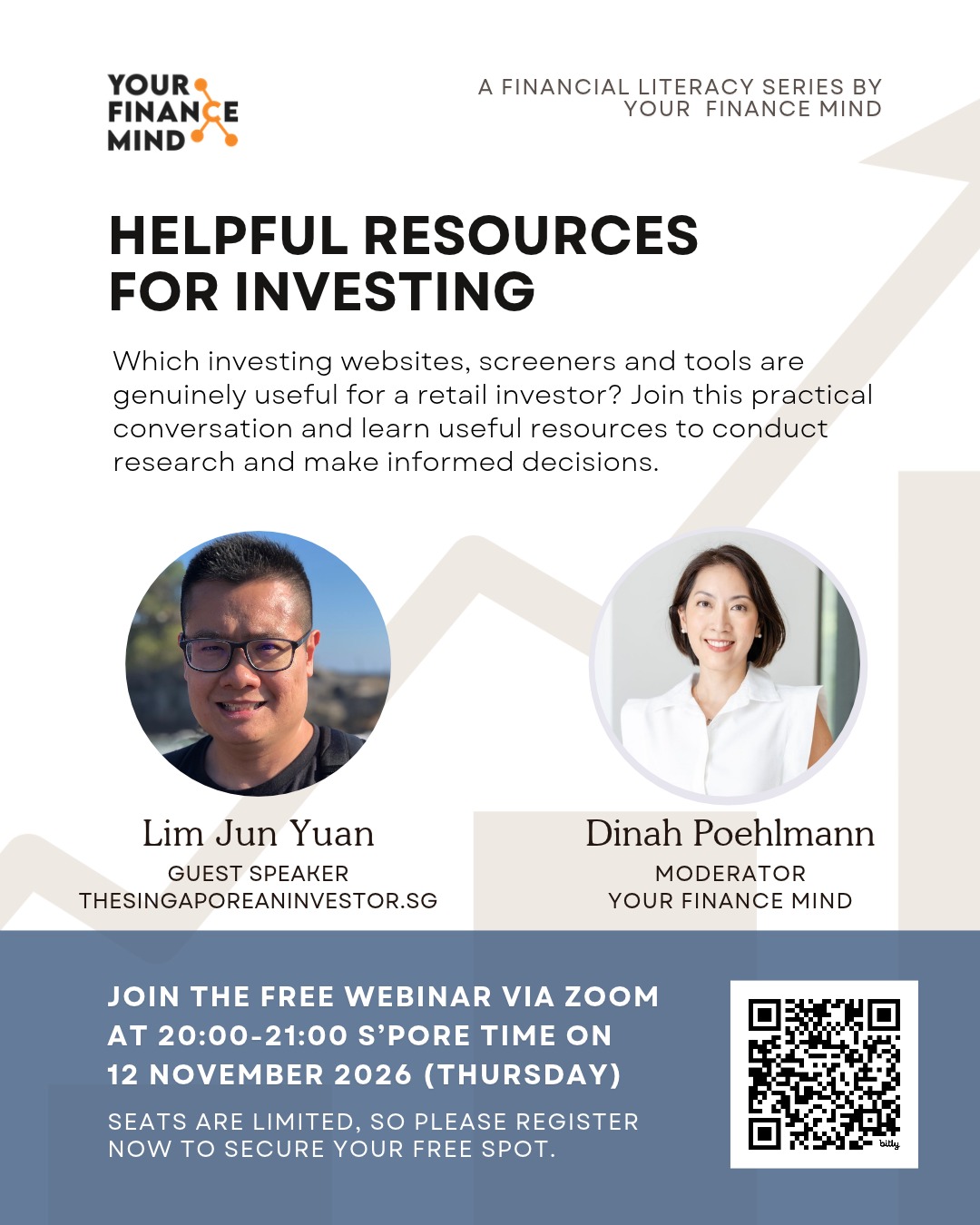
It's been quite some time since I last had a live chit-chat with the investing community, and I’m excited to be back for another session! A big thank you to my friend, Dinah Poehlmann from Your Finance Mind, for inviting me once again!
This time, we’re taking a little break from REITs and exploring some interesting topics surrounding investing, including my go-to investing resources, when is a stock considered 'investable', my thoughts about using AI for stock analysis and trading, and much more.
Whether you're just starting your investing journey or have been investing for years, I hope this session will offer some useful perspectives and practical takeaways that you can apply to your own investing journey.
Best of all, the session is completely FREE to attend! All you need to do is register in advance to receive the Zoom link:
👉 Click here to reserve your spot!
Stop Spending Hours Reading REIT Reports Every Quarter!
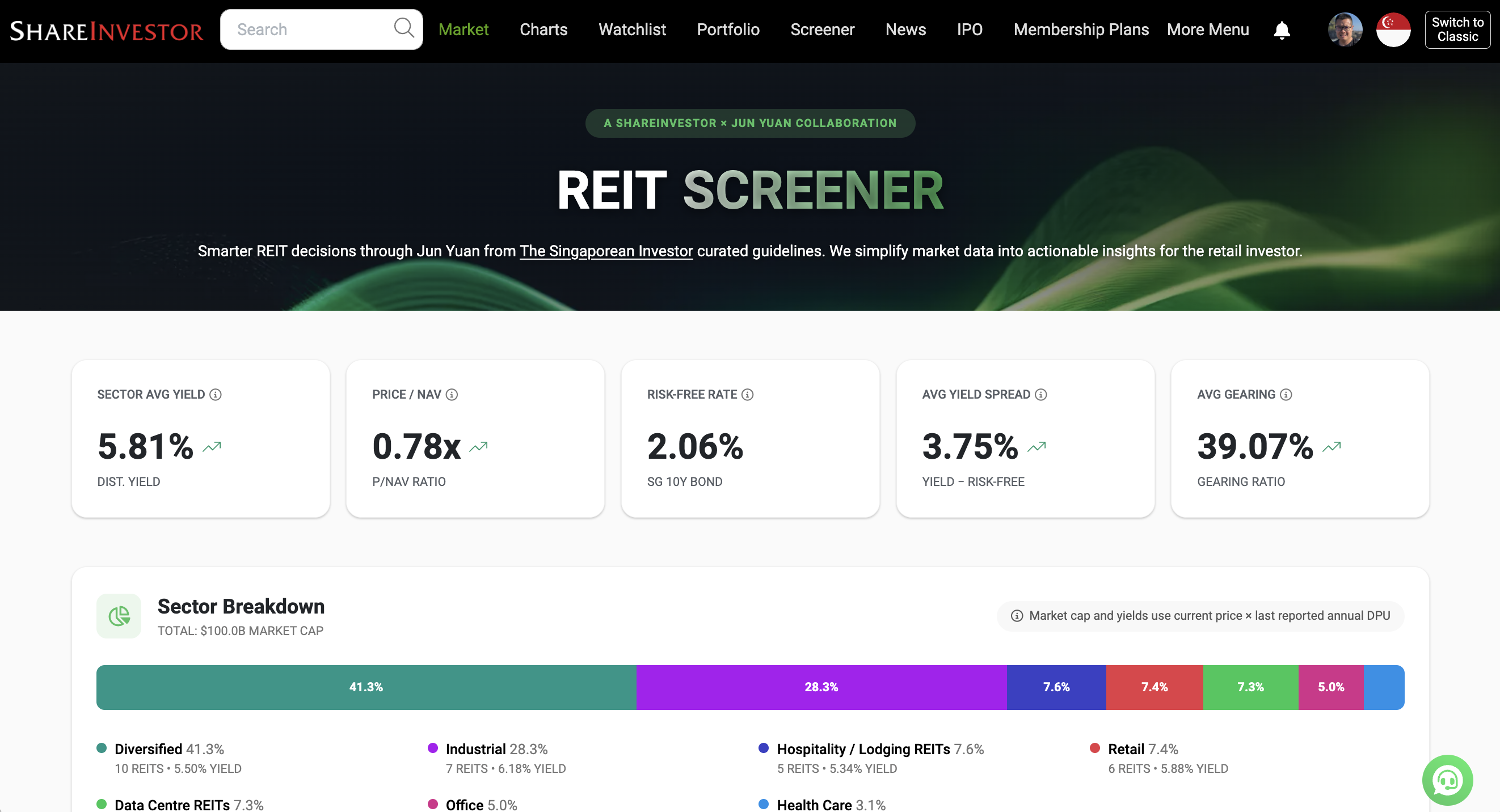
What if you could assess a REIT's portfolio occupancy, debt profile, valuation, and overall health in less than 30 seconds - without having to comb through a single quarterly report?
That's the problem the REIT Screener was built to solve.
Developed through a collaboration between ShareInvestor and The Singaporean Investor, the REIT Screener consolidates many of the key metrics and indicators I personally use when analysing REITs into one easy-to-use platform. Instead of spending hours extracting data manually every earnings season, you can now monitor the REITs you own and research new opportunities in just a few clicks.
If you're serious about REIT investing but don't have the time to manually track quarterly developments, the REIT Screener could be the shortcut you've been looking for:
Take a closer look at the REIT Screener here...



Comments (0)