From a high of 3,641 points in April 2018, Singapore’s Straits Times Index (or STI for short) is now at 2,799 points at the time of writing (on 11 March 2020) – it has dropped by 23% from its high.
Based on the definition of what is considered as a “bear market”, it is one where the market drops by more than 20% from its most recent high. As the STI have already dropped by more than 20% from its most recent high (at the time of writing), you can say that we are in a “bear market” now.
It is the first time since I started trading/investing on a full-time basis (in late-2017) that I experienced such a huge drop in the STI. It is also the first time I’m faced with the index plummeting by 179 points (or a 6% drop) in one single day on Monday, 09 March 2020. The huge drop on that particular day was due to increasing fears of the Covid-19 becoming a pandemic, along with a plunge in oil prices after OPEC failed to strike a deal with its allies about oil production cuts.
Because of current Covid-19 situation around the world, many industries are negatively affected, and it is inevitable that many listed companies will likely report weaker results ahead. Having said that, as an investor, we must be fully prepared for the share price of the companies to further tumble when they release their financial results.
So, what am I to do in the tough few months ahead – both as a short-term trader, as well as a long-term investor?
1. Re-look into My Strategy
To be very frank with you, I did not expect the stock market to tank so badly as a result of Covid-19 – I was expecting some correction at worst (and my plans were made for such.)
But, looking at how things are going as far as Covid-19 is concerned, it seems that the situation may get worst before it becomes better. As such, we must be mentally prepared for the market to sink even lower, before we may see any recovery.
That said, I have been spending the past couple of days to study my long-term investing strategy and figure out the best way to add on to my long-term portfolio in the months ahead, along with how best I should perform short-term trades in a hugely volatile condition like this (at the time of writing, I’m in the midst of testing out my new strategy.)
In case you’re wondering, I have already taken advantage of the current situation to add on 5 companies to my long-term portfolio – 3 REITs (Suntec REIT, CapitaLand Mall Trust, and Mapletree North Asia Commercial Trust), along with 2 Singapore banks (DBS and UOB.) You can check out my long-term portfolio here.
2. Be Extra Selective about Companies I Add to my Long-Term Portfolio
Times like this offer huge opportunities for investors to invest in quality companies at discounted prices. While I’d like to add all the companies I like to my long-term portfolio, but I am limited by the amount of cash I have at hand. Hence, I need to be extra selective about the companies I add to my long-term portfolio.
Also, when I set out to build my long-term investment portfolio back in August 2019, I have a target of having 15 companies (at max) in my portfolio.
At the time of writing, I already have 9 companies in my portfolio – meaning I only have space for another 6. So, what are some of the companies in my shortlist? They are:
- Mapletree Commercial Trust (SGX:N2IU)
- Mapletree Industrial Trust (SGX:ME8U)
- Mapletree Logistics Trust (SGX:M44U)
- Keppel DC REIT (SGX:AJBU)
- Singapore Exchange (SGX:S68)
- Parkway Life REIT (SGX:C2PU)
- SPH REIT (SGX:SK6U)
As you can see from my “shopping list” above, my preference is towards companies that pay out dividends on a quarterly basis (with the exception of banks.)
In terms of prices of these companies, they are no where near where I want to invest in them at the moment, and I’ll be patiently waiting for my preferred entry prices to come (which I personally feel could be possible over the next couple of months should the market continue to deteriorate.)
3. The Ability to Control our Emotions
I’d be lying if I tell you that I have remained “poker faced” throughout the past couple of weeks – especially when days where I see all my holdings ended the day in red.
I am only a human, and having only 2+ years of experience in trading/investing, my mood do get affected as well when I see my portfolio’s overall unrealised P/L turning from green to deep red. Additionally, the number of negative news all over made matters worse.
As much as it is important for us to have an investment plan to deal with the situation ahead, our ability to manage our emotions is another thing I feel I need to master (especially at this point in time.)
Some of the things I do to keep my emotions in check include constantly reminding myself why I embark on building my long-term investment portfolio in the first place, along with telling myself that this whole episode will past eventually (as the saying goes, “this soon shall pass.”)
Another thing I tend to do these days is to focus my attention on other things, such as spending more time to read and research more extensively to improve my trading/investing knowledge, along with engaging in information sharing with fellow traders/investors who are much more experienced than myself, where I learn from them how to become an even better trader/investor (I will not mention names here – you know who you are, and from the bottom of my heart, I’d like to say a big thank you for everything.)
In Conclusion
I always believe, “while there is nothing we can do to control the external environment, but we have absolute control over what we can think or do to navigate through them – be it good or bad.”
As I still consider myself to be relatively inexperienced, I know it’s inevitable that I will make some mistakes along the way, as I navigate through a rough condition like this one we’re faced with right now. But having said that, I believe that situations like this will turn me into a better investor/trader at the end of the day when the dark clouds finally passes.
I hope you like my personal share today, and I look forward to sharing more with you about my investing/trading journey, and company analyses ahead.
Meanwhile, I’d like to take this opportunity to wish you the very best in your investing and/or trading journey. With a strong plan and belief (in ourselves), I’m sure we’ll all be able to navigate through this rough wave, and emerge at the other end much stronger! 💪
Join Me for a FREE Live Online Chit-Chat on Thursday, 12 November, from 8–9pm (SGT)!
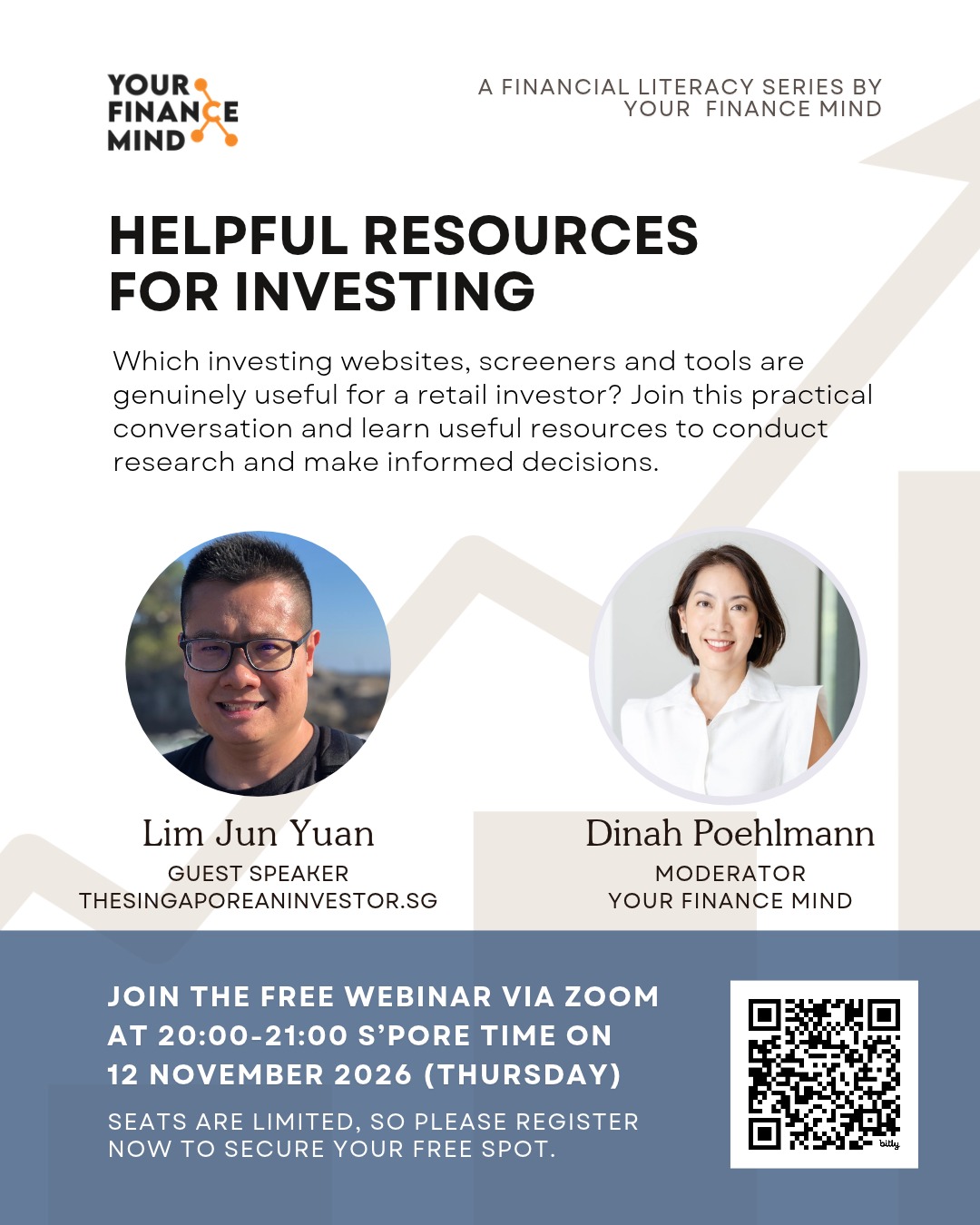
It's been quite some time since I last had a live chit-chat with the investing community, and I’m excited to be back for another session! A big thank you to my friend, Dinah Poehlmann from Your Finance Mind, for inviting me once again!
This time, we’re taking a little break from REITs and exploring some interesting topics surrounding investing, including my go-to investing resources, when is a stock considered 'investable', my thoughts about using AI for stock analysis and trading, and much more.
Whether you're just starting your investing journey or have been investing for years, I hope this session will offer some useful perspectives and practical takeaways that you can apply to your own investing journey.
Best of all, the session is completely FREE to attend! All you need to do is register in advance to receive the Zoom link:
👉 Click here to reserve your spot!
Stop Spending Hours Reading REIT Reports Every Quarter!
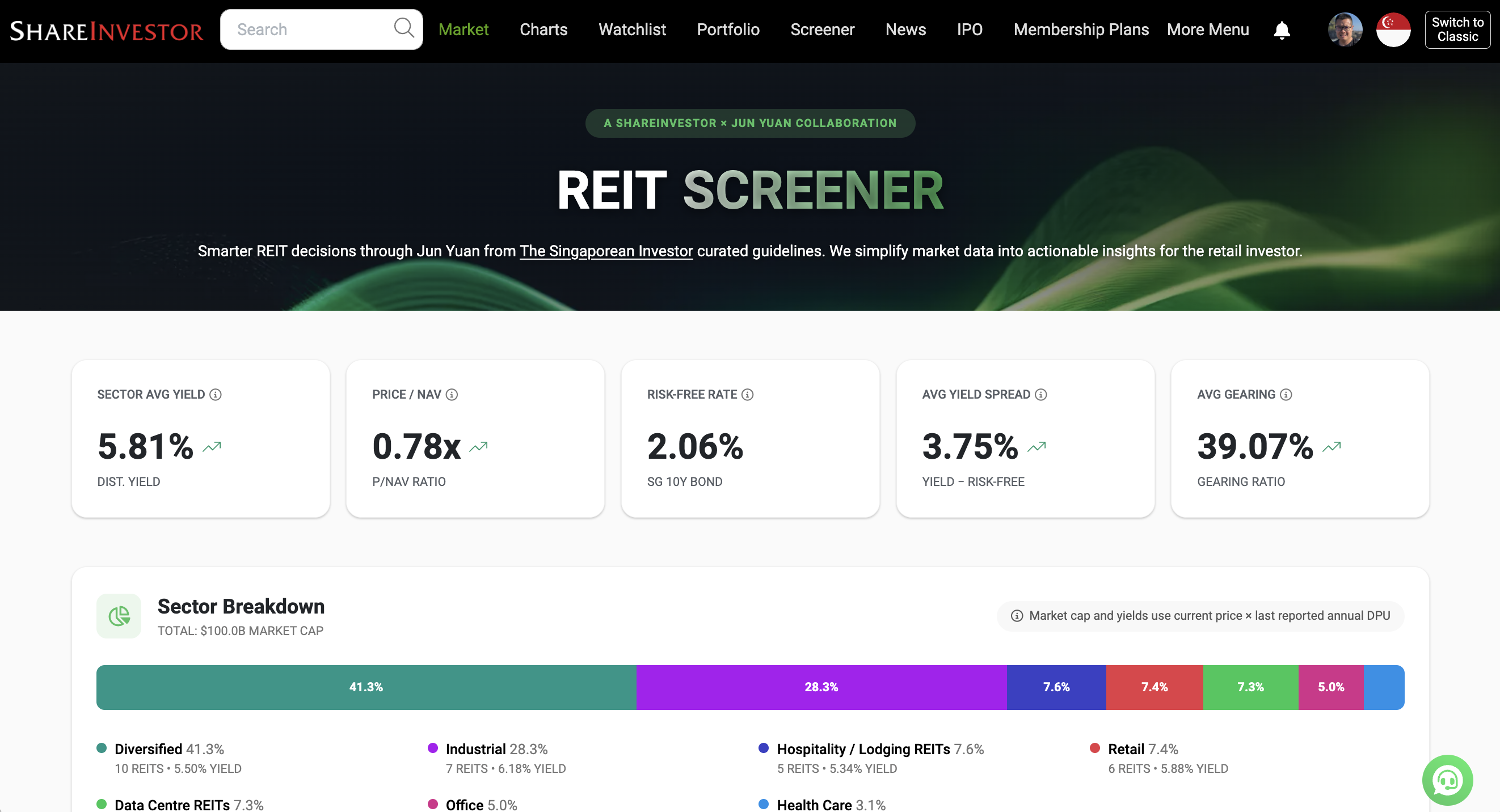
What if you could assess a REIT's portfolio occupancy, debt profile, valuation, and overall health in less than 30 seconds - without having to comb through a single quarterly report?
That's the problem the REIT Screener was built to solve.
Developed through a collaboration between ShareInvestor and The Singaporean Investor, the REIT Screener consolidates many of the key metrics and indicators I personally use when analysing REITs into one easy-to-use platform. Instead of spending hours extracting data manually every earnings season, you can now monitor the REITs you own and research new opportunities in just a few clicks.
If you're serious about REIT investing but don't have the time to manually track quarterly developments, the REIT Screener could be the shortcut you've been looking for:
Take a closer look at the REIT Screener here...



Comments (2)