When we think about the qualities that make a successful investor, intelligence is often the first thing that comes to mind.
Perhaps it is the ability to analyse financial statements, understand different business models, identify undervalued companies, or recognise emerging industry trends.
While these skills are undoubtedly important, there is another quality that is often overlooked.
In fact, I believe it is arguably one of the most important traits an investor can develop.
That skill is “self-control”.
In investing, knowing what you should do is only one part of the equation.
The bigger challenge is having the discipline to follow through, especially when emotions and market movements make it difficult to do so.
Let us take a closer look at why self-control is such an important investing skill.
The Challenge Is Often Not Knowledge, But Behaviour
Most investors understand the basic principles of investing.
They know that they should focus on quality companies, avoid overpaying, maintain a diversified portfolio, and avoid making decisions based purely on emotions.
Yet, when markets become volatile, applying these principles becomes much more difficult.
When stock prices rise sharply, optimism and excitement can quickly take over.
Investors who previously had no interest in a particular company may suddenly start buying simply because others around them appear to be making money.
Driven by the fear of missing out (FOMO), they often enter after a significant price increase, hoping that the upward trend will continue.
However, when market conditions reverse, emotions can change just as quickly.
Confidence turns into fear, and investors who were once eager to own stocks may suddenly want to sell everything as prices decline.
The issue is not that these investors lack knowledge about investing.
Rather, the challenge is their inability to control their emotions when faced with uncertainty.
Investing Requires Delayed Gratification
One of the biggest tests of self-control in investing is the ability to focus on long-term outcomes instead of short-term satisfaction.
In today’s environment, investors have access to real-time stock prices and are constantly exposed to stories of people making quick profits.
This can make it difficult to remain patient.
However, successful investing often requires making decisions that may not provide immediate rewards.
For example, buying shares of a fundamentally strong company when market sentiment is negative may feel uncomfortable.
Choosing to hold cash while waiting patiently for better opportunities may feel like missing out on potential gains.
Continuing to invest consistently even when portfolio returns appear disappointing may test an investor’s conviction.
Yet, these decisions are often made because investors understand that wealth creation takes time.
Investing is not about constantly chasing the next opportunity or searching for instant results.
It is about following a sound process, allowing businesses to grow, and giving the power of compounding enough time to work.
Investors who can delay short-term gratification are often better positioned to stay disciplined and avoid making emotional decisions.
Avoiding Unnecessary Decisions
Self-control is also reflected in knowing when not to take action.
Many investors assume that successful investing requires constant activity.
They feel the need to frequently buy and sell stocks, adjust their portfolios, or react to every piece of market news.
However, sometimes the best decision an investor can make is simply to do nothing.
Every investment decision carries its own risks.
Buying a company without sufficient research can result in permanent capital loss.
Selling a high-quality business because of temporary market weakness may cause investors to miss out on future gains.
Similarly, constantly changing investment strategies can prevent investors from giving their original approach enough time to work.
Having self-control means being comfortable with staying invested and remaining patient when there is no compelling reason to make a change.
Learning to Control Your Expectations
Another important aspect of self-control is managing expectations.
Many investors enter the market expecting every investment to generate strong returns quickly.
When their portfolio fails to outperform the latest market trend, disappointment sets in.
This often causes them to abandon a sensible investment approach and chase whatever is currently performing well.
However, investing is a journey measured over years, not weeks or months.
There will always be periods where certain strategies perform better while others temporarily struggle.
A disciplined investor understands that short-term underperformance does not automatically mean that an investment strategy is flawed.
Instead of constantly searching for the next big opportunity, they focus on improving their investment process and making better decisions over time.
Building Systems To Reduce Emotional Decisions
The good news is that self-control is not simply something investors either have or do not have.
It can be strengthened through the right systems and habits.
For example, investors can develop an investment checklist before purchasing a stock.
This encourages them to evaluate an investment based on facts and analysis, rather than excitement or fear.
They can also establish clear portfolio rules, such as maintaining diversification, limiting position sizes, or defining conditions under which they will buy or sell.
Another useful habit is maintaining an investment journal.
By documenting the reasons behind each investment decision, investors can later review whether they followed their own principles or allowed emotions to influence their actions.
Over time, these practices help reduce emotional decision making and encourage greater investment discipline.
Closing Thoughts
Investing is often viewed as a battle of knowledge.
However, having more information does not automatically translate into better investment results.
Many investors struggle not because they lack knowledge, but because they find it difficult to apply what they already know when emotions take over.
Self-control allows investors to remain patient when opportunities are limited, stay calm during periods of uncertainty, and avoid decisions driven by fear or greed.
The ability to control emotions, manage expectations, and follow a consistent process may not sound as exciting as discovering the next multibagger investment opportunity.
However, over the long run, these qualities can make a significant difference between investors who steadily build wealth and those who repeatedly fall into the same behavioural traps.
Therefore, investors should not only spend time improving their ability to analyse companies.
They should also spend time improving themselves.
Because ultimately, the biggest challenge in investing is often not the market.
It is ourselves.
Join Me for a FREE Live Online Chit-Chat on Thursday, 12 November, from 8–9pm (SGT)!
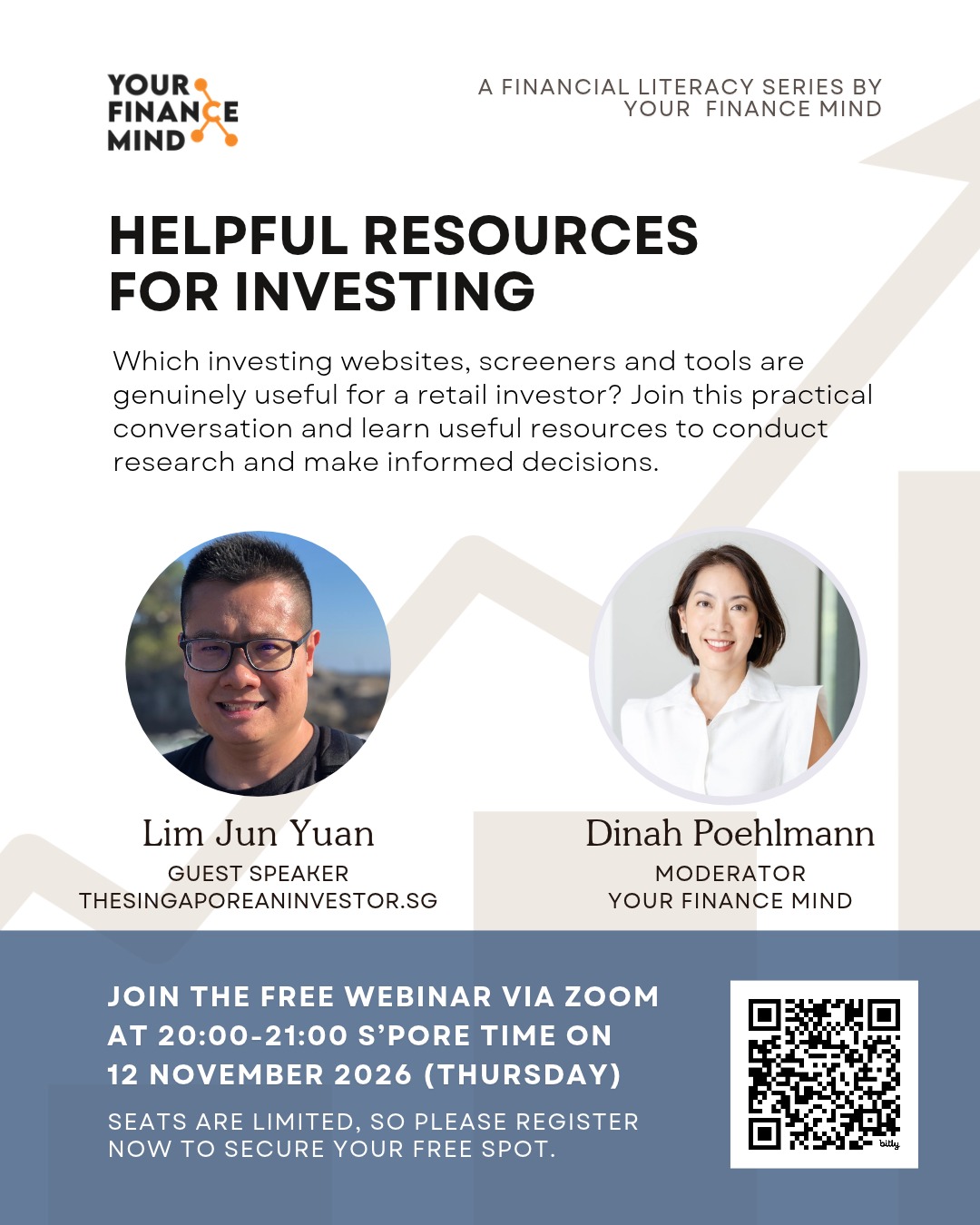
It's been quite some time since I last had a live chit-chat with the investing community, and I’m excited to be back for another session! A big thank you to my friend, Dinah Poehlmann from Your Finance Mind, for inviting me once again!
This time, we’re taking a little break from REITs and exploring some interesting topics surrounding investing, including my go-to investing resources, when is a stock considered 'investable', my thoughts about using AI for stock analysis and trading, and much more.
Whether you're just starting your investing journey or have been investing for years, I hope this session will offer some useful perspectives and practical takeaways that you can apply to your own investing journey.
Best of all, the session is completely FREE to attend! All you need to do is register in advance to receive the Zoom link:
👉 Click here to reserve your spot!
Are You Worried about Not Having Enough Money for Retirement?
You're not alone. According to the OCBC Financial Wellness Index, only 62% of people in their 20s and 56% of people in their 30s are confident that they will have enough money to retire.
But there is still time to take action. One way to ensure that you have a comfortable retirement is to invest in real estate investment trusts (REITs).
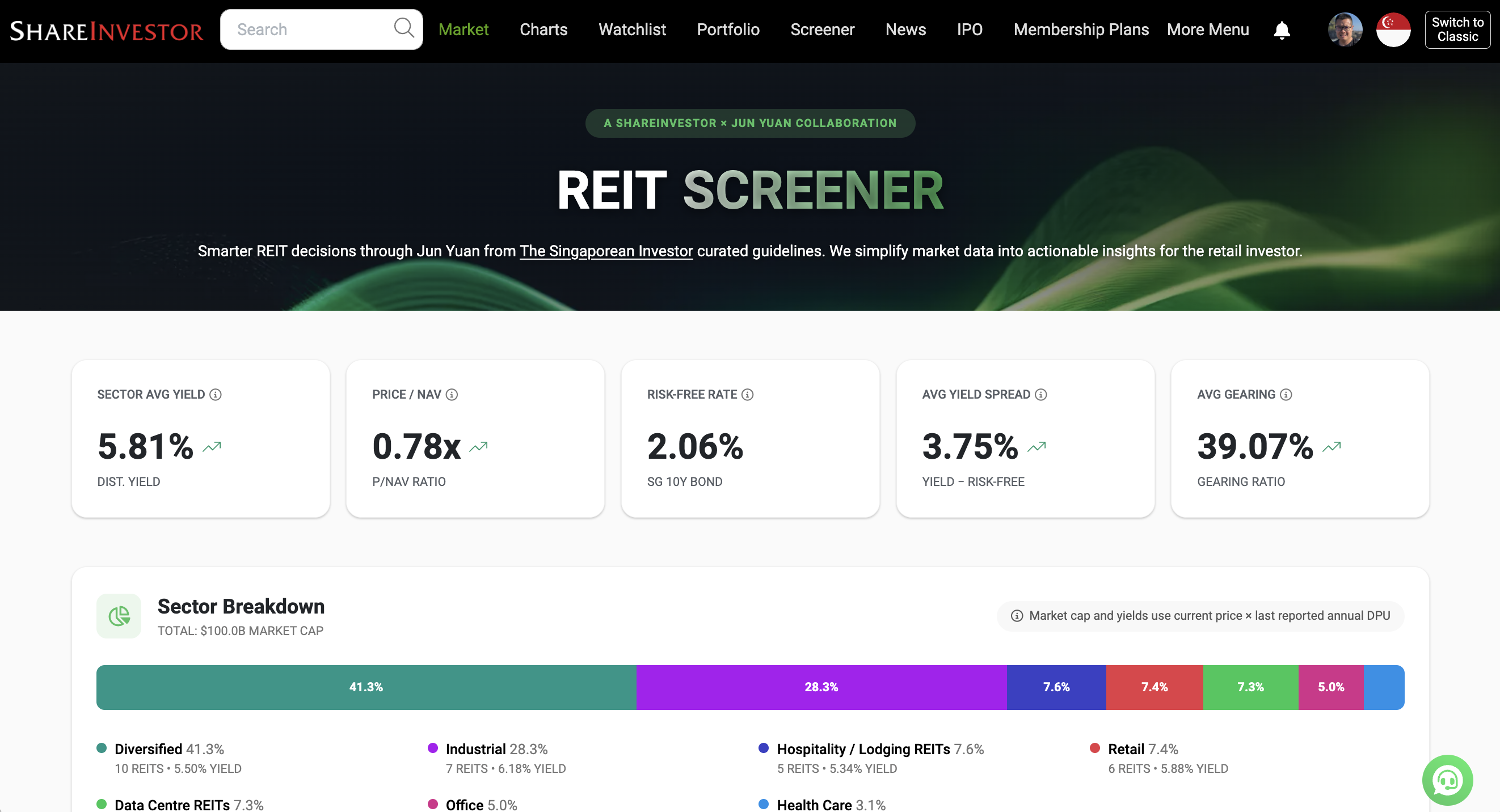
In 'Building Your REIT-irement Portfolio' which I've authored, you will learn everything you need to know to build a successful REIT investment portfolio, including a list of 9 things to look at to determine whether a REIT is worthy of your investment, 1 simple method to help you maximise your returns from your REIT investment, 4 signs of 'red flags' to look out for and what you can do as a shareholder, and more!

You can find out more about the book, and grab your copy (ebook or physical book) here...


Comments (0)