What’s the first thing that comes to mind when you think of the Singapore-listed Pan-United Corporation Limited (SGX: P52)?
If “cement” is your answer, you’re not alone — that was my initial thought too. However, after visiting their premises, listening to a presentation by Mr. Jim Teh, Pan-United’s Head of Corporate Development, taking a tour of their R&D facilities, and engaging in a Q&A with Mr. Ken Loh, their CEO, I gained a much deeper understanding of the company – in that regard, I am very thankful to the team at SGListCos for organising and for the invite.
In this post, I’ll be sharing my research on Pan-United, focusing on its financial performance, debt profile, and dividend payouts to shareholders, alongside insights from the site visit – all of which I hope will help you gain a better understanding of the company’s operations and allow you to make a more informed investment decision.
1. What are Pan-United Corporation Limited’s Businesses?
Pan-United Corporation Limited (SGX: P52) has a rich history dating back to 1958, when it was first founded, and it became publicly listed on the Singapore Exchange in 1993.
The company primarily focuses on ready-mix concrete (RMC) solutions, which are created by blending raw materials such as cement, cementitious materials, stone aggregates, sand, water, and admixtures. RMC is then delivered directly to construction sites. Pan-United is the market leader in Singapore, holding around 40% of the market share. It also has a presence in Southeast Asia, with operations in Kuala Lumpur and Johor in Malaysia, as well as in Ho Chi Minh City, Vietnam, where it is one of the largest RMC suppliers.
While some raw materials are sourced from abroad, Pan-United produces its concrete in Singapore. This is because concrete hardens quickly, making it impractical to produce it in other countries and transport it to Singapore.
2. Where Is Pan-United’s RMC Used in Singapore?
Pan-United’s ready-mix concrete is used in a variety of significant projects across Singapore.
For example, its concrete is used in the runways at Changi Airport, where the materials contribute to smoother landings for airplanes.
It is also used in MRT tunnels, where the concrete’s anti-corrosion and self-healing properties allow it to repair microcracks autonomously, without the need for human intervention.
Additionally, the concrete is used in the walls surrounding radiology rooms at the National Cancer Centre, with materials specifically designed to shield radiation and protect healthcare workers.
These are just a few examples of where Pan-United’s RMC plays a critical role.
3. In Which Countries Does Pan-United Generate Its Revenue?
Pan-United generates 85% of its revenue from Singapore, with projects coming from both government agencies and private companies.
4. How Has Pan-United’s Financial Performance Been?
The table below outlines Pan-United’s financial performance (gross revenue, net profit, and net profit margin) over the past five years (FY2021 to FY2025, with the fiscal year ending on 31 December):
| FY2021 | FY2022 | FY2023 | FY2024 | FY2025 | |
| Gross Revenue (S$’mil) | $585.6m | $703.3m (+20.1%) | $774.1m (+10.1%) | $812.3m (+4.9%) | $898.4m (+10.6%) |
| Net Profit (S$’mil) | $18.7m | $23.4m (+25.1%) | $34.3m (+46.6%) | $40.9m (+19.2%) | $50.7m (+24.0%) |
| Net Profit Margin (%) | 3.2% | 3.3% | 4.4% | 5.0% | 5.6% |
In my view, Pan-United’s growth in gross revenue and net profit has been notably resilient, with double-digit improvements in all but one year (where gross revenue saw a 4.9% increase in FY2024).
The compound annual growth rate (CAGR) for gross revenue stands at 8.9%, while net profit achieved an impressive 22.1% CAGR.
Pan-United’s net profit margin has also consistently improved each year, climbing from 3.2% in FY2021 to a 5-year high of 5.6% in FY2025. According to management, this growth is attributed to the adoption of technology, which has driven operational cost savings and allowed for improved product quality, resulting in higher profit margins.
5. Does Pan-United Pay Dividends to Its Shareholders, and What Are Its Dividend Payouts and Yields Like?
Pan-United’s management declares a dividend payout on a half-yearly basis.
The table below shows the company’s dividend payouts to shareholders over the past 5 years (FY2021 to FY2025), along with the corresponding dividend yields (calculated based on the dividend payouts and the closing share price on the last trading day of each financial year):
| FY2021 | FY2022 | FY2023 | FY2024 | FY2025 | |
| Dividend Per Share (S$’cents) | 1.1 cents | 1.8 cents (+63.6%) | 2.3 cents (+27.8%) | 3.0 cents (+30.4%) | 4.5 cents (+50.0%) |
| Dividend Yield (%) | 3.2% | 3.3% | 4.4% | 5.0% | 5.6% |
Consistent with the double-digit growth in its net profit, Pan-United’s dividend payouts have also seen significant growth during the same period.
The dividend yield has improved from 3.2% in FY2021 to 5.6% in FY2025. In the last 3 years, I would consider the yield to be quite attractive, especially for income-focused investors.
6. Is Pan-United in a Net Cash or Net Debt Position?
The table below shows Pan-United’s cash position:
| FY2021 | FY2022 | FY2023 | FY2024 | FY2025 | |
| Cash & Cash Equivalents (S$’mil) | $64.2m | $64.6m | $64.4m | $107.0m | $99.8m |
| Total Borrowings (S$’mil) | $46.6m | $54.7m | $21.3m | $15.5m | $10.5m |
| Net Cash/Debt (S$’mil) | +$17.6m | +$9.9m | +$43.1m | +$91.5m | +$89.3m |
| Current Ratio | 1.6 | 1.7 | 1.7 | 1.7 | 1.6 |
Pan-United has consistently maintained a net cash position throughout the 5-year period I have looked at. Its net cash position has significantly improved, rising from +S$9.9 million in FY2022 to a peak of +S$91.5 million in FY2024.
Additionally, the company’s current ratio remains healthy, consistently above 1.0, indicating that Pan-United has no issues meeting its short-term debt obligations.
7. Considering Singapore is a Small Country, What is the Growth Potential for Pan-United Given its Focus on the Home Market?
From what I understand, Pan-United stands to benefit from a consistent pipeline of large-scale projects in Singapore, many of which are government-led.
These include developments such as Changi Airport Terminal 5, the redevelopment of Paya Lebar Airbase (which will be relocated to make way for a new town), the Tuas Mega Port (a 4-phase project that will become the world’s largest fully automated terminal upon completion in the 2040s), the Greater Southern Waterfront (a major urban transformation stretching 30km along the southern coast from Pasir Panjang to Marina East), and various MRT projects.
All of these initiatives are set to provide Pan-United with a reliable income stream in the years to come.
8. Has the Middle East Crisis, Which Caused a Surge in Fuel Costs, Had Any Financial Impact on the Company?
Based on my understanding, any increased costs due to the fuel price surge will be passed on to the company’s customers, meaning there is no direct impact on the company’s financial performance.
9. What is the Likelihood of Pan-United’s Product Range Being Reverse-Engineered by Competitors, Affecting Its Profit Margin?
The management explained that developing a concrete product takes several years, including approval from the Building & Construction Authority for safety purposes — typically a process that takes 3 to 5 years.
Additionally, some projects require customised concrete products, which is why the company invests heavily in its research and development team.
Therefore, it is unlikely that competitors could easily reverse-engineer a product and disrupt Pan-United’s profit margin.
Closing Thoughts
After gaining a deeper understanding of the company through the site visit, my conclusion is that Pan-United has a certain ‘moat’ in its business, primarily due to its dominant market share in Singapore’s concrete products sector and the difficulty of replicating its products.
The company is also involved in several major government-led projects, which ensures revenue stability. This is reflected in its financial performance, with steady growth over the past 5 years, as evidenced by a CAGR of 8.9% in gross revenue and an impressive 22.1% CAGR in net profit.
Similarly, its dividend payouts have grown at a CAGR of 32.6% over the same period, with recent yields surpassing 4%, which is attractive for income-focused investors.
Furthermore, with 85% of its revenue generated in Singapore, foreign exchange risk remains minimal.
Disclaimer: At the time of writing, I do not have shares of Pan-United Corporation Limited.
Join Me for a FREE Live Online Chit-Chat on Thursday, 12 November, from 8–9pm (SGT)!
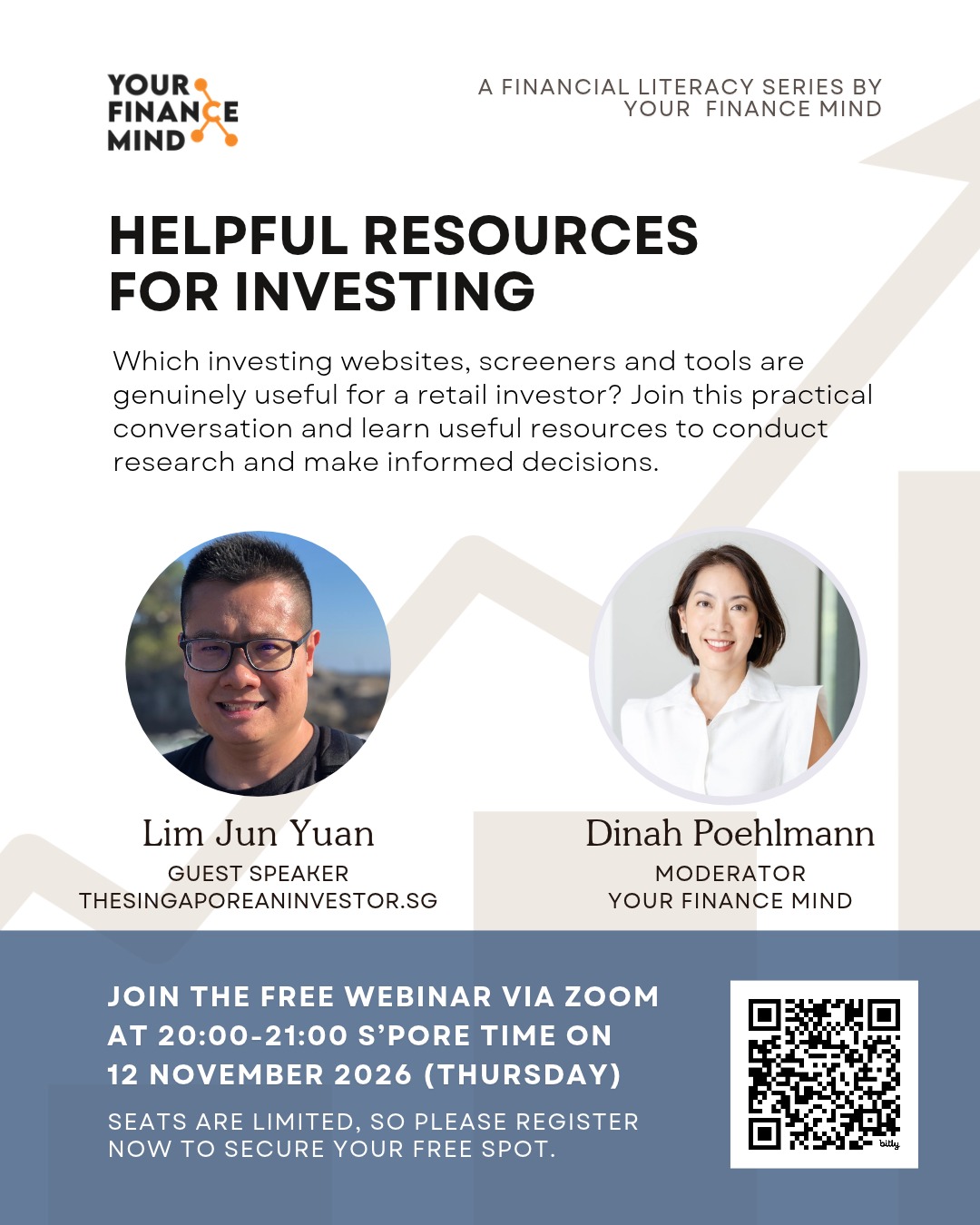
It's been quite some time since I last had a live chit-chat with the investing community, and I’m excited to be back for another session! A big thank you to my friend, Dinah Poehlmann from Your Finance Mind, for inviting me once again!
This time, we’re taking a little break from REITs and exploring some interesting topics surrounding investing, including my go-to investing resources, when is a stock considered 'investable', my thoughts about using AI for stock analysis and trading, and much more.
Whether you're just starting your investing journey or have been investing for years, I hope this session will offer some useful perspectives and practical takeaways that you can apply to your own investing journey.
Best of all, the session is completely FREE to attend! All you need to do is register in advance to receive the Zoom link:
👉 Click here to reserve your spot!
Stop Spending Hours Reading REIT Reports Every Quarter!
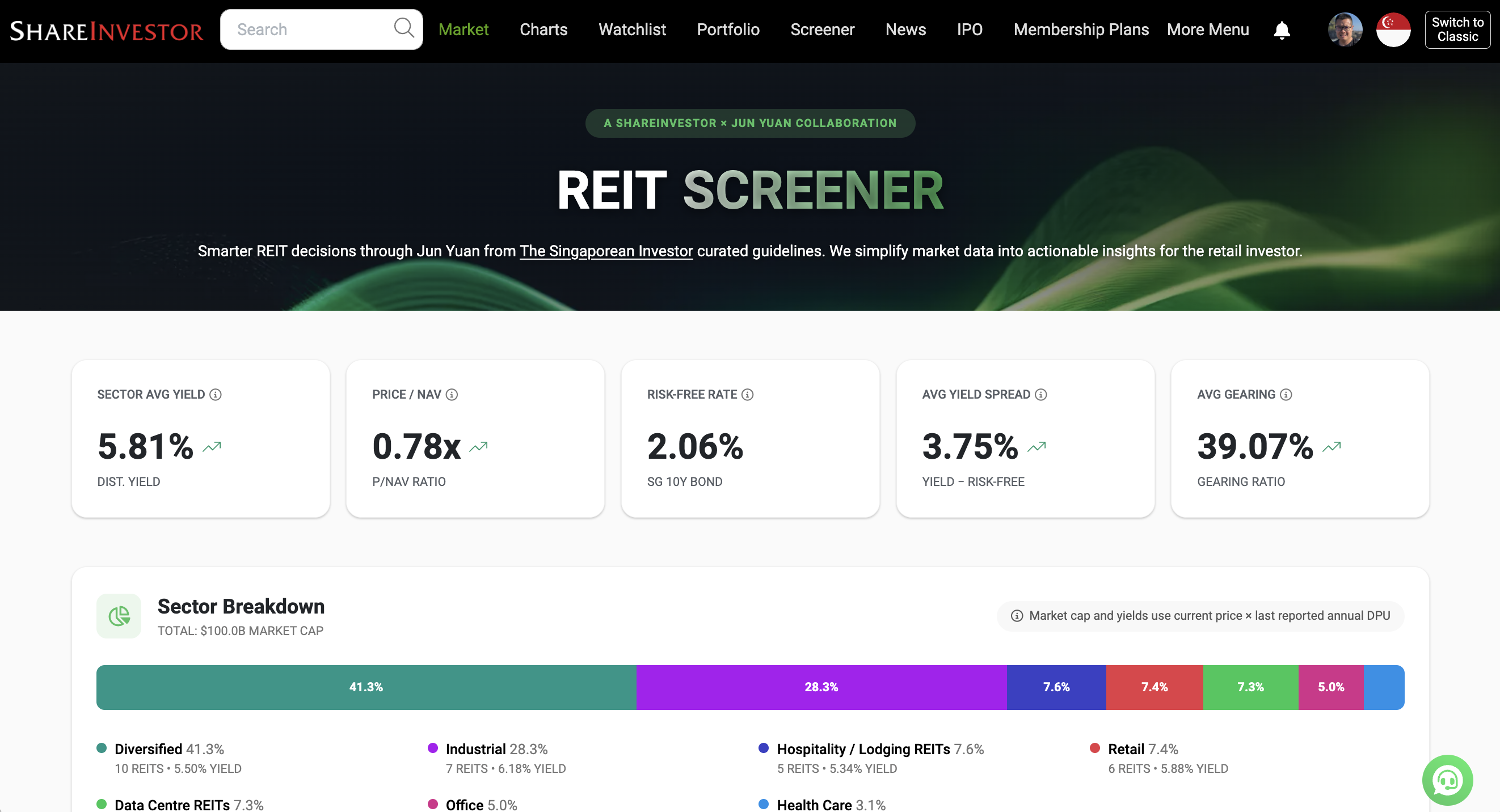
What if you could assess a REIT's portfolio occupancy, debt profile, valuation, and overall health in less than 30 seconds - without having to comb through a single quarterly report?
That's the problem the REIT Screener was built to solve.
Developed through a collaboration between ShareInvestor and The Singaporean Investor, the REIT Screener consolidates many of the key metrics and indicators I personally use when analysing REITs into one easy-to-use platform. Instead of spending hours extracting data manually every earnings season, you can now monitor the REITs you own and research new opportunities in just a few clicks.
If you're serious about REIT investing but don't have the time to manually track quarterly developments, the REIT Screener could be the shortcut you've been looking for:
Take a closer look at the REIT Screener here...



Comments (0)