When we think about what determines our investment returns, our attention usually goes straight to the investments we choose.
Did we invest in the right company?
Did we buy its shares at an attractive price?
Did we manage to spot the next big investment opportunity before everyone else?
While all these certainly matter, there is another factor that can have an equally significant impact on our investment returns – our emotions.
Fear, greed, excitement, regret and even overconfidence can influence the decisions we make, often without us even realising it.
And sometimes, the biggest threat to our investment returns may not be what happens in the market.
It may actually be how we react to it.
Fear Can Make Us Sell at the Worst Possible Time
Nobody enjoys watching their investment portfolio fall in value.
When markets decline sharply and negative headlines dominate the news, it is perfectly normal to feel worried.
However, the problem begins when that fear starts influencing the investment decisions we make.
Imagine buying shares of a fundamentally sound company with the intention of holding them for the next 5 to 10 years. A few months later, the market enters a sharp correction and its share price falls by 20%, even though there has been no significant change to the company’s underlying fundamentals.
As you watch the share price fall day after day and the headlines become increasingly negative, you begin questioning your original investment decision.
Eventually, the fear of suffering even greater losses becomes too much to bear, and you decide to sell – not because the company’s fundamentals have deteriorated, but simply because its share price has fallen.
Ironically, if the company’s fundamentals remain intact, the lower share price could actually make the investment more attractive than when you first bought it.
Yet emotionally, we often feel the exact opposite – the further its share price falls, the more we want to stay away from it.
This is how fear can turn temporary market volatility into permanent investment losses.
Greed Can Be Just as Dangerous
If fear can cause investors to sell when prices are falling, greed can push them towards the opposite mistake – buying after prices have already risen significantly.
Imagine watching a stock climb 20%, then 30%, and eventually 50%.
You initially decided not to invest because you felt its valuation was simply too expensive. But as the share price continues rising, you start wondering whether you may have overlooked something.
Then, you see other investors talking about how much money they have made from the stock.
Suddenly, your concerns about its expensive valuation take a back seat, and another powerful emotion begins to take over – the fear of missing out, or FOMO for short.
Before long, you convince yourself to buy the stock, not because its fundamentals have improved significantly or its valuation has become more attractive, but because you are afraid its share price will continue rising and you will miss out on even greater gains.
This is how greed and FOMO can lead investors to buy at inflated valuations – and sometimes, close to the peak.
Our Purchase Price Can Affect Our Judgement
Another emotional trap can emerge after we have already made an investment.
Suppose you bought a stock at $2.00, only to see its share price subsequently fall to $1.50.
You review the company again and discover that its fundamentals have deteriorated significantly since you first invested in it.
Logically, selling the investment may be the sensible thing to do.
Emotionally, however, accepting the loss can be extremely difficult.
So, instead of selling, you tell yourself:
“I’ll wait until it gets back to $2.00 before I sell.”
But here’s the thing: the market does not care what price you paid.
Your original purchase price should therefore not determine whether an investment is still worth holding today.
Instead, a better question to ask yourself is:
“If I did not already own this investment, would I still be willing to buy it at its current price today?”
If the answer is a resounding ‘no’, then it may be worth asking yourself why you are still holding on to it.
Winning Can Also Affect Our Emotions
Interestingly, emotions do not only become dangerous when we are losing money.
They can be equally dangerous when we are making money.
Imagine making several successful investments in a row.
With each successful investment, you may gradually become more confident in your ability to identify winning stocks.
But there is a fine line between confidence and overconfidence.
Before you know it, you may start investing larger amounts of money, spending less time researching companies because you believe your judgement, or perhaps even your ‘sixth sense’, is good enough.
You may even start taking risks that you would previously never have considered.
The danger here is that a rising market can make almost everyone look like a good investor.
It is often only when market conditions change that we discover how much of our investment returns came from skill, how much came from luck, and how much came from a combination of both.
Create Rules Before Your Emotions Take Over
One of the best ways to reduce emotionally-driven investment decisions is to establish a clear investment framework before your emotions enter the picture.
Before putting your hard-earned money into a company, take some time to answer a few important questions:
Why are you investing in this company in the first place?
What developments would cause you to divest?
How much of your portfolio are you comfortable allocating to it?
And perhaps most importantly, what are the risks involved, and are you comfortable taking them?
Having clear answers to these questions does not mean you will never feel fearful, greedy or uncertain.
We are human beings, after all.
Instead, having an investment framework gives you something objective to fall back on when emotions are running high and telling you to do something completely different from what you originally planned.
Closing Thoughts
Emotions are an unavoidable part of investing.
When markets fall, we will naturally feel worried.
When share prices rise rapidly, we may feel tempted to chase them.
When an investment performs badly, we may struggle to admit that our original investment thesis was wrong.
And when several investments perform well, we may become more confident in our abilities than we should be.
The objective, therefore, is not to eliminate emotions completely. That would be almost impossible.
Instead, it is about recognising when our emotions are beginning to influence the decisions we make.
Fear can cause us to sell fundamentally sound investments at the wrong time. Greed and FOMO can encourage us to chase stocks at unreasonable valuations. Regret can cause us to hold onto deteriorating investments simply because we do not want to realise a loss. And overconfidence can encourage us to take risks that we normally would not.
This is why I believe having a clear investment framework is so important.
Before making your next investment, consider writing down why you are buying it, the risks involved, what would cause you to sell, and how much of your portfolio you are prepared to allocate to it.
Then, whenever emotions start creeping in, go back and review what you wrote.
Sometimes, improving your investment returns does not require finding better stocks.
It simply requires making fewer decisions driven by our emotions.
Join Me for a FREE Live Online Chit-Chat on Thursday, 12 November, from 8–9pm (SGT)!
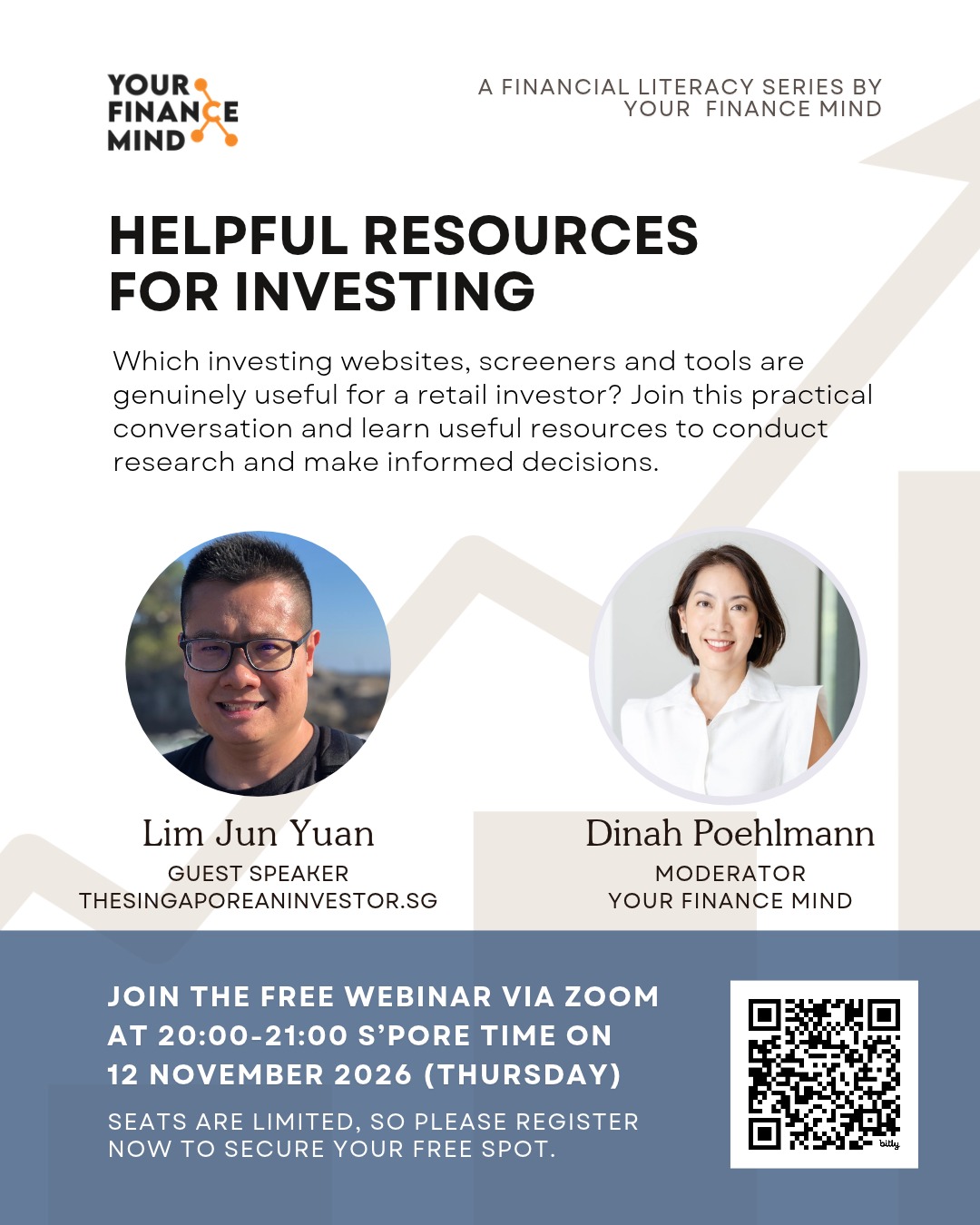
It's been quite some time since I last had a live chit-chat with the investing community, and I’m excited to be back for another session! A big thank you to my friend, Dinah Poehlmann from Your Finance Mind, for inviting me once again!
This time, we’re taking a little break from REITs and exploring some interesting topics surrounding investing, including my go-to investing resources, when is a stock considered 'investable', my thoughts about using AI for stock analysis and trading, and much more.
Whether you're just starting your investing journey or have been investing for years, I hope this session will offer some useful perspectives and practical takeaways that you can apply to your own investing journey.
Best of all, the session is completely FREE to attend! All you need to do is register in advance to receive the Zoom link:
👉 Click here to reserve your spot!
Are You Worried about Not Having Enough Money for Retirement?
You're not alone. According to the OCBC Financial Wellness Index, only 62% of people in their 20s and 56% of people in their 30s are confident that they will have enough money to retire.
But there is still time to take action. One way to ensure that you have a comfortable retirement is to invest in real estate investment trusts (REITs).
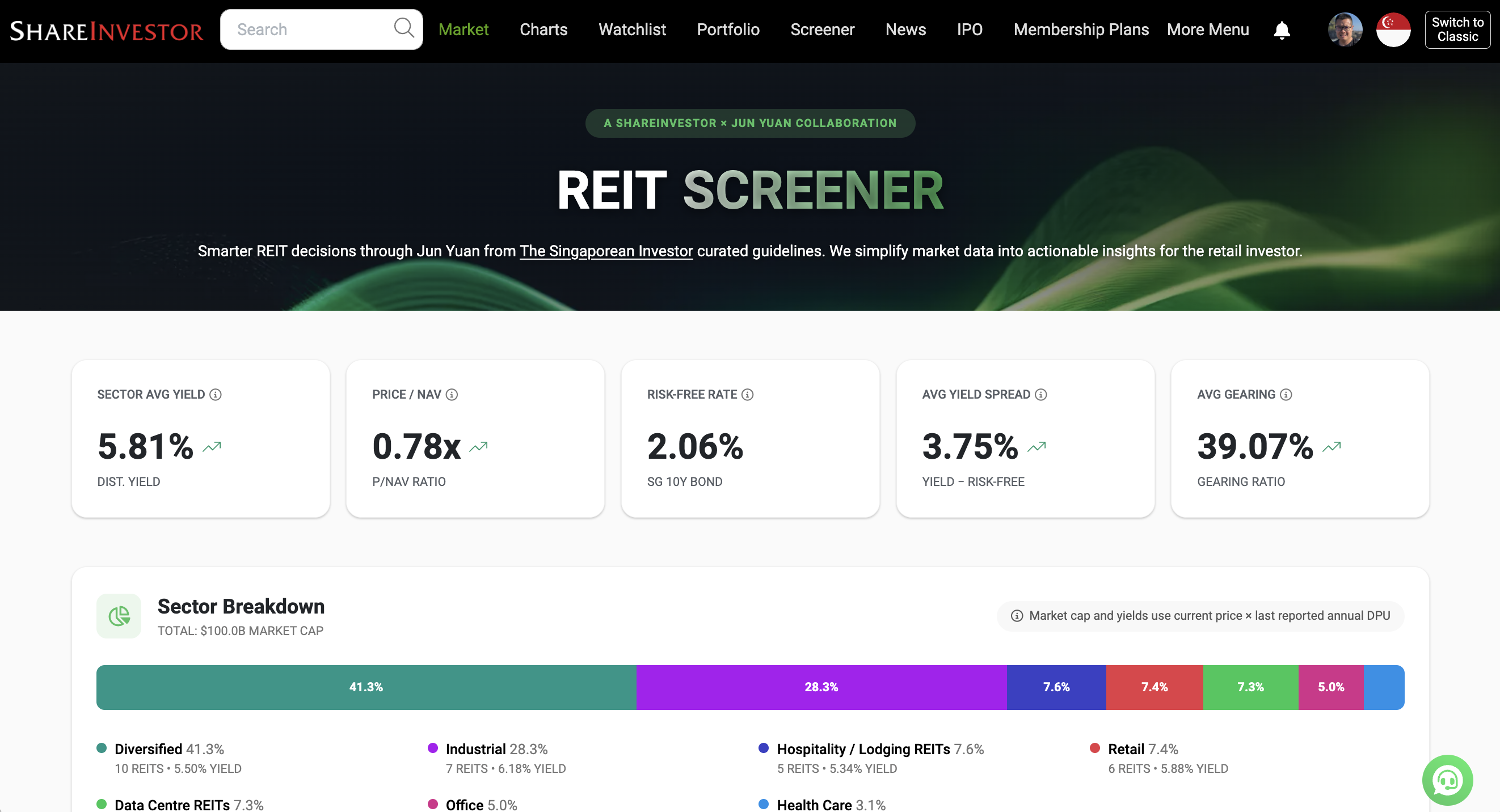
In 'Building Your REIT-irement Portfolio' which I've authored, you will learn everything you need to know to build a successful REIT investment portfolio, including a list of 9 things to look at to determine whether a REIT is worthy of your investment, 1 simple method to help you maximise your returns from your REIT investment, 4 signs of 'red flags' to look out for and what you can do as a shareholder, and more!

You can find out more about the book, and grab your copy (ebook or physical book) here...


Comments (0)