1. What is the CSOP Hang Seng TECH Index ETF?
Launched in August 2020 by CSOP Asset Management, the CSOP Hang Seng TECH Index ETF (SEHK: 3033) was the world’s first ETF to track the performance of the Hang Seng TECH Index. It does so using a full replication strategy, meaning the ETF invests in every constituent of the index in roughly the same proportions. This allows its portfolio to closely mirror the underlying index, giving investors exposure to the performance of the Hang Seng TECH Index as accurately as possible.
The ETF provides investors with targeted exposure to Hong Kong-listed technology and innovation companies spanning industries such as e-commerce, internet platforms, artificial intelligence (AI), cloud computing, semiconductors, electric vehicles (EVs), consumer electronics, digital healthcare and financial technology (fintech).
2. What is the Hang Seng TECH Index?
The Hang Seng TECH Index, which the ETF tracks, was launched by Hang Seng Indexes Company in July 2020 to measure the performance of the 30 largest and most liquid technology and innovation companies listed on the Stock Exchange of Hong Kong (SEHK).
Think of it as Hong Kong’s equivalent of the Nasdaq-100. While the broader Hang Seng Index is dominated by traditional sectors such as banks, property developers and utilities, the Hang Seng TECH Index focuses on the ‘new economy’ by tracking companies involved in internet services, e-commerce, fintech, cloud computing, AI and other technology-driven industries.
3. How are Companies Selected for the Index?
To be included in the Hang Seng TECH Index, a company must first be listed on the Main Board of the SEHK and have significant exposure to technology-related industries, such as internet services, fintech, digital platforms, cloud computing, e-commerce or other innovation-driven business models.
From this pool of eligible companies, the index selects the 30 largest and most liquid constituents based on a combination of their free-float market capitalisation and turnover velocity, which measures how actively their shares are traded. This ensures the index comprises not only some of Hong Kong’s largest technology companies, but also stocks that are sufficiently liquid for investors to buy and sell.
To ensure the index continues to accurately represent Hong Kong’s leading technology companies, it is reviewed and rebalanced every quarter. During each review, companies may be added to or removed from the index, while the weightage of existing constituents may also be adjusted to reflect changes in their market capitalisation, trading activity and overall eligibility.
4. What is the Sector Breakdown of the ETF?
Although commonly regarded as a technology ETF, the portfolio spans several sectors because many modern technology companies operate businesses beyond traditional software or hardware.
As at 31 July 2026, the ETF’s holdings were spread across 4 sectors: Communication Services (39.8%), Consumer Discretionary (30.8%), Information Technology (27.7%) and Consumer Staples (1.9%).
The relatively large allocation to Consumer Discretionary may come as a surprise to some investors. This is because companies such as Alibaba, Meituan and JD.com are classified as consumer businesses, even though they operate highly sophisticated technology platforms.
5. What are the Top 10 Holdings by Weightage in the ETF?
As at 31 July 2026, the ETF’s top 10 holdings accounted for 72.6% of its total portfolio. As such, the performance of these companies has a significant influence on the ETF’s overall returns.
From a sector perspective, 4 companies are classified under Communication Services, while 3 each fall under Information Technology and Consumer Discretionary.
The following are the ETF’s top 10 holdings and their respective weightages:
1. Meituan Dianping-Class B (SEHK: 3690) (Weightage: 9.33%): Meituan Dianping is one of China’s largest online lifestyle platforms, best known for its food delivery services. Beyond food delivery, it also operates businesses in hotel and travel bookings, grocery delivery, bike sharing, restaurant reviews, and other local on-demand services, connecting consumers with millions of merchants through its mobile app.
2. NetEase Inc (SEHK: 9999) (Weightage: 9.07%): Dual listed on SEHK and Nasdaq, NetEase Inc is one of China’s largest internet and gaming companies. It is best known for developing and operating popular online and mobile games, while also offering businesses in music streaming (through NetEase Cloud Music), online education technologies, and various internet services.
3. Tencent Holdings Ltd (SEHK: 700) (Weightage: 8.51%): Tencent Holdings Ltd is one of China’s largest technology companies, operating a wide range of internet services. It is best known for WeChat, China’s most popular messaging and payment app, while also generating revenue from online gaming, digital advertising, cloud computing, fintech services and investments in numerous technology companies worldwide.
4. BYD Co Ltd (SEHK: 1211) (Weightage: 8.39%): BYD Co Ltd. is best known as one of the world’s largest manufacturers of EVs and plug-in hybrid vehicles, selling passenger cars, buses and commercial vehicles under the BYD brand. Beyond vehicles, the company also develops its own batteries, electric drivetrains and other key automotive technologies, giving it greater control over its supply chain and production costs. In addition, BYD has businesses in electronics manufacturing and renewable energy solutions, such as energy storage systems, making it a leading player in the global transition towards cleaner transportation and energy
5. Xiaomi Corporation-Class B (SEHK: 1810) (Weightage: 8.38%): Xiaomi Corporation is a consumer electronics company best known for its smartphones, but it also sells a wide range of smart devices such as tablets, smartwatches, TVs, home appliances and electric vehicles. Beyond hardware, it generates revenue from internet services including advertising, cloud services and digital content through its ecosystem of connected devices.
6. Alibaba Group Holding Ltd (SEHK 9898) (Weightage: 7.71%): Alibaba Group Holding Ltd is a technology company best known for operating some of China’s largest e-commerce platforms, including Taobao and Tmall, which connect consumers with millions of merchants. Beyond online shopping, it also provides cloud computing services, digital logistics, local delivery, digital entertainment and AI technologies, making it one of China’s largest digital ecosystem companies.
7. Semiconductor Manufacturing International Corporation (SEHK: 981) (Weightage: 6.65%): Semiconductor Manufacturing International Corporation, or SMIC, is China’s largest semiconductor foundry. It manufactures semiconductor chips designed by other companies, which are then used in products such as smartphones, computers, cars, industrial equipment and AI systems.
8. JD.com Inc (SEHK: 9618) (Weightage: 5.62%): JD.com Inc is one of China’s largest e-commerce companies, operating an online shopping platform where consumers can purchase products ranging from electronics and home appliances to groceries and everyday essentials. Beyond online retail, the company also owns one of China’s largest nationwide logistics and delivery networks, providing warehousing and fulfilment services to both its own business and third-party merchants.
9. Lenovo Group Ltd (SEHK: 992) (Weightage: 4.51%): Lenovo Group Ltd is a technology company best known for designing and selling personal computers (PCs), laptops and workstations under the Lenovo brand. Beyond PCs, it also provides smartphones, tablets, servers, data centre infrastructure and IT solutions, helping both consumers and businesses with their computing and digital transformation needs.
10. Baidu Inc-Class A (SEHK: 9888) (Weightage: 4.44%): Baidu Inc is a Chinese technology company best known for operating one of China’s largest internet search engines (think of it as the ‘Google’ in China). Beyond online search, it also provides AI services, cloud computing solutions, autonomous driving technology and digital mapping, helping businesses and consumers access information and use AI-powered applications.
6. What is the Dividend Payout Frequency of the ETF?
Since its launch, the CSOP Hang Seng TECH Index ETF has not declared any dividend distributions to unitholders.
This is largely because many of the companies within the portfolio prioritise reinvesting their earnings to support future growth rather than paying dividends. As such, investors should view the ETF primarily as a vehicle for long-term capital appreciation rather than passive income.
7. What are Some of the Key Risks to Consider?
1. Concentration Risk: The ETF’s top 10 holdings account for more than 70% of its portfolio. As a result, weaker performance from just a handful of companies could have a noticeable impact on the ETF’s overall returns.
2. Technology Sector Risk: Technology companies typically offer stronger long-term growth potential than many traditional industries, but they also tend to experience greater share price volatility. Changes in investor sentiment, interest rates, AI expectations, innovation cycles and competitive pressures can all lead to significant price swings.
3. China Regulatory Risk: One of the key risks associated with investing in Chinese technology companies is regulatory intervention. In recent years, Chinese authorities have introduced regulations affecting industries such as internet platforms, online gaming, fintech, data privacy and education technology (edtech). Future policy changes could materially affect the earnings and valuations of these companies, and in turn, the performance of the ETF.
4. Geopolitical and Delisting Risks: Several of the ETF’s constituents, including Alibaba, NetEase and Trip.com, are also listed in the United States through American Depositary Receipts (ADRs). Ongoing US-China tensions over audit oversight, export controls and the potential delisting of Chinese ADRs could negatively affect investor sentiment towards their Hong Kong-listed shares as well.
5. Currency Risk: Although the ETF is traded in Hong Kong dollars, many of its underlying companies generate the bulk of their revenue in Renminbi. As such, fluctuations in exchange rates between the Hong Kong dollar, Renminbi and an investor’s home currency may affect overall investment returns.
6. Market Sentiment Risk: Growth-oriented technology stocks generally perform well during periods of strong market optimism but can experience sharp declines when investors become more risk-averse. During such periods, investors often rotate into more defensive sectors, causing technology stocks to underperform.
8. How has the CSOP Hang Seng TECH Index ETF Performed in the Last 5 Years?
The chart below illustrates how the ETF’s unit price has performed on a monthly basis since January 2021:
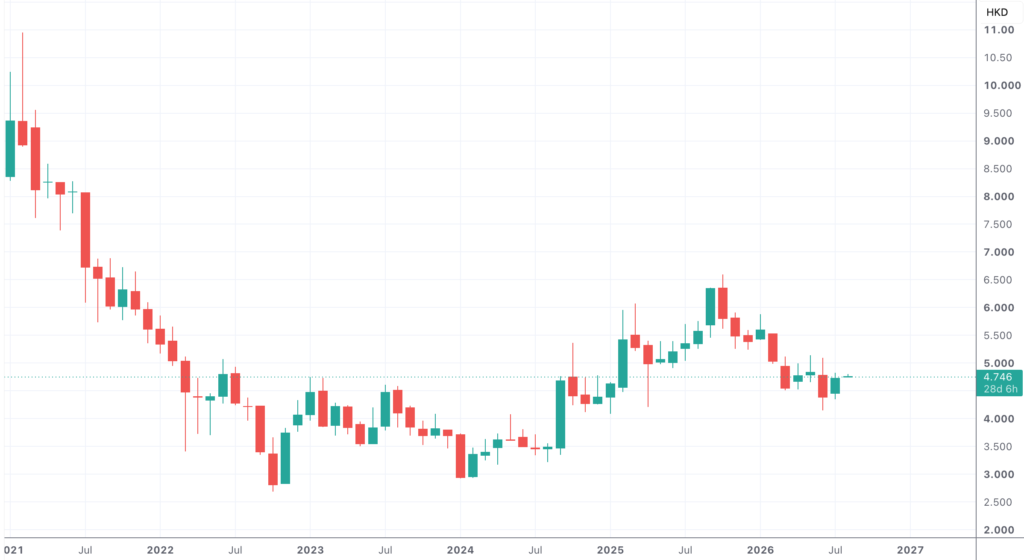
Since reaching a high of HKD10.95 in February 2021, the ETF experienced a prolonged decline before bottoming at HKD2.69 in October 2022 – representing a fall of approximately 75%.
The decline was driven by several factors. Arguably the biggest catalyst was China’s regulatory crackdown on its technology sector. During this period, Alibaba was fined RMB18.2 billion for alleged anti-competitive practices, Tencent faced tighter restrictions on acquisitions and certain business practices, while Meituan came under investigation over its treatment of delivery riders and alleged monopolistic behaviour. At the same time, stricter rules surrounding data security, cybersecurity, online algorithms and consumer data collection further weighed on investor confidence.
Beyond regulatory concerns, the sector also faced several macroeconomic headwinds, including China’s property market downturn, prolonged Zero-Covid lockdowns, aggressive global interest rate hikes and heightened US-China geopolitical tensions.
Although the ETF has since recovered from its October 2022 low, it was still trading at around HKD4.75 in early August 2026 at the time of writing – approximately 56% below its all-time high recorded in February 2021.
Investors who purchased the ETF on the first trading day of 2021 at HKD8.36 and remained invested until 31 December 2025, when it closed at HKD5.39, would still have been sitting on an unrealised capital loss of approximately 35.5%, excluding transaction costs.
9. What is the Lot Size & Price Increment of the ETF?
The CSOP Hang Seng Tech Index ETF is traded on the SEHK in board lots of 200 units, meaning investors generally buy and sell the ETF in multiples of 200 units.
The ETF also has a tick size of HKD0.002, meaning its quoted price moves in increments of HKD0.002.
Closing Thoughts
The CSOP Hang Seng TECH Index ETF provides investors with a convenient and cost-effective way to gain diversified exposure to some of China’s largest and most influential technology companies through a single investment.
Instead of selecting individual companies such as Tencent, Alibaba, Xiaomi, BYD or Meituan, investors can gain exposure to a portfolio of 30 leading technology and innovation businesses that collectively represent many of China’s fastest-growing industries.
That said, investors should recognise that this is a higher-risk ETF compared to broad-market index funds. Its returns are heavily influenced by developments in China’s technology sector, including regulatory changes, geopolitical tensions and shifts in market sentiment. In addition, the ETF has not declared any dividend distributions since its launch, making it more suitable for investors seeking long-term capital appreciation rather than regular passive income.
For investors who are optimistic about the long-term growth of China’s technology sector and are comfortable with higher volatility, the CSOP Hang Seng TECH Index ETF may be worth considering as a satellite holding within a well-diversified investment portfolio.
Disclaimer: At the time of writing, I do not have any units of the CSOP Hang Seng Tech ETF.
Join Me for a FREE Live Online Chit-Chat on Thursday, 12 November, from 8–9pm (SGT)!
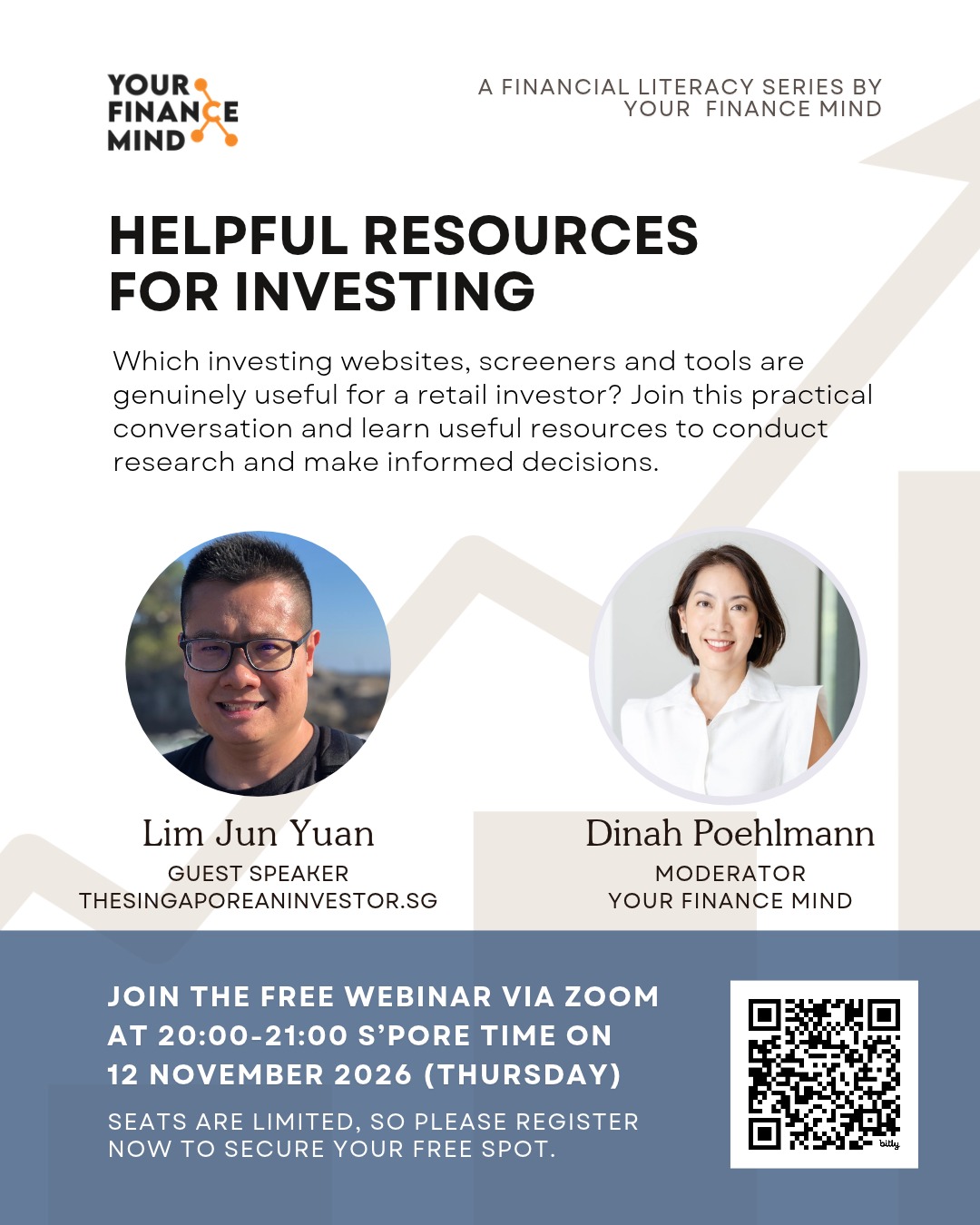
It's been quite some time since I last had a live chit-chat with the investing community, and I’m excited to be back for another session! A big thank you to my friend, Dinah Poehlmann from Your Finance Mind, for inviting me once again!
This time, we’re taking a little break from REITs and exploring some interesting topics surrounding investing, including my go-to investing resources, when is a stock considered 'investable', my thoughts about using AI for stock analysis and trading, and much more.
Whether you're just starting your investing journey or have been investing for years, I hope this session will offer some useful perspectives and practical takeaways that you can apply to your own investing journey.
Best of all, the session is completely FREE to attend! All you need to do is register in advance to receive the Zoom link:
👉 Click here to reserve your spot!
Are You Worried about Not Having Enough Money for Retirement?
You're not alone. According to the OCBC Financial Wellness Index, only 62% of people in their 20s and 56% of people in their 30s are confident that they will have enough money to retire.
But there is still time to take action. One way to ensure that you have a comfortable retirement is to invest in real estate investment trusts (REITs).
In 'Building Your REIT-irement Portfolio' which I've authored, you will learn everything you need to know to build a successful REIT investment portfolio, including a list of 9 things to look at to determine whether a REIT is worthy of your investment, 1 simple method to help you maximise your returns from your REIT investment, 4 signs of 'red flags' to look out for and what you can do as a shareholder, and more!

You can find out more about the book, and grab your copy (ebook or physical book) here...


Comments (0)