One of the first things new investors discover is that the stock market rarely moves in a straight line.
There will inevitably be periods when share prices rise steadily and optimism seems to be everywhere. Likewise, there will also be times when markets decline sharply, financial news becomes overwhelmingly negative, and investors begin questioning whether they should continue investing at all.
While market volatility is an unavoidable part of investing, I believe it is often not the biggest threat to long-term investment success.
Instead, the bigger danger is the 4-letter word called ‘fear’.
After all, market volatility is something we have no control over. Fear, on the other hand, influences the decisions we make, and those decisions can ultimately determine whether we benefit from long-term wealth creation or miss out on it entirely.
Market Volatility Is Normal
Whenever markets experience a significant correction, it is common to see headlines describing billions of dollars being wiped off global stock markets.
For someone who is new to investing, these headlines can understandably feel intimidating (and I can totally understand that).
However, it is important to recognise that volatility is not a sign that investing has stopped working.
Rather, it is simply one of the characteristics of investing in businesses.
If you look back over the past few decades, markets have experienced numerous periods of uncertainty:
The global financial crisis.
The COVID-19 pandemic.
Inflation concerns.
Rapid interest rate increases.
Geopolitical tensions.
Despite these challenges, investors who remained invested have continued to enjoy attractive long-term returns. For example, the S&P 500 delivered an average annual return of approximately 14.8% over the 10-year period from January 2016 to December 2025.
The journey, however, is far from smooth.
Fear Often Leads to Poor Decisions
While market declines themselves may be temporary, the decisions investors make during those periods can have permanent consequences.
One of the most common mistakes is panic selling.
When prices are falling every day and negative news dominates the headlines, selling often feels like the safest option.
After all, nobody enjoys watching the value of their portfolio decline.
The problem is that fear encourages us to focus on what is happening today rather than what is likely to happen over the next 5, 10, or 20 years.
History has shown that markets eventually recover from downturns, although nobody can accurately predict exactly when that recovery will begin.
Investors who sell during periods of fear therefore face a second challenge: Not only must they decide when to sell, but they must also determine when to buy back in again.
Unfortunately, many end up missing both decisions.
Volatility Creates Opportunity
Although market corrections rarely feel enjoyable while they are happening, they often create opportunities for long-term investors.
When quality businesses become cheaper simply because overall market sentiment has deteriorated, patient investors may have the opportunity to accumulate investments at more attractive valuations.
This does not mean that every falling stock represents a buying opportunity.
Some companies deserve to trade at lower valuations because their businesses have fundamentally deteriorated.
However, there are also occasions when high-quality companies experience significant share price declines despite their long-term fundamentals remaining largely intact.
Distinguishing between the 2 requires careful analysis.
More importantly, it requires the emotional discipline to look beyond short-term market sentiment.
Why We Naturally Fear Falling Markets
Fear is a perfectly normal human emotion.
In fact, our brains are designed to react more strongly to losses than gains.
Behavioural economists often refer to this as loss aversion. Simply put, losing S$10,000 usually feels much more painful than the satisfaction of making S$10,000.
This explains why many investors become increasingly anxious during market downturns, even if they had originally planned to invest for decades.
Our emotions begin telling us to stop the pain immediately.
Unfortunately, emotional decisions are not always rational decisions.
Successful investing often requires us to act differently from what our instincts are telling us to do.
Time Reduces the Impact of Volatility
One reason experienced investors tend to worry less about market volatility is because they understand the importance of time.
Over short periods, share prices can fluctuate significantly due to economic data, political events, investor sentiment, or unexpected news.
Over much longer periods, however, business performance and earnings growth tend to play a much larger role in determining investment returns.
This is one of the reasons why many long-term investors focus less on daily market movements and more on whether the businesses they own continue executing well.
Temporary price fluctuations become less significant when viewed through the lens of decades rather than days.
Your Investment Plan Shouldn’t Change Every Time the Market Does
One mistake I often observe among beginner investors is allowing market conditions to determine their investment strategy – When markets are rising, they become more aggressive. On the flip side, when markets fall, they become more conservative.
As a result, their investment approach changes constantly.
A sensible investment plan should already account for the possibility of market corrections.
If your investment objectives, risk tolerance, and investment horizon have not changed, then short-term market volatility alone should not automatically cause you to abandon your long-term strategy.
Of course, this is often much easier to say than to do.
However, developing this discipline is one of the most valuable investing skills you can acquire, and your future self will thank you for doing exactly that.
Confidence Comes From Preparation
One reason fear affects many beginner investors so strongly is because uncertainty creates doubt.
Questions begin appearing almost immediately:
“Should I continue investing?”
“What if markets keep falling?”
“Should I wait until things become clearer?”
These questions are perfectly understandable (and to be very honest, I felt the same way in the past when I was just starting out).
However, confidence rarely comes from predicting what markets will do next.
Instead, it comes from understanding why you are investing, having a sensible investment framework, and recognising that volatility is an expected part of the journey rather than an unexpected setback.
Preparation does not eliminate fear entirely.
It simply prevents fear from controlling your decisions.
Closing Thoughts
Market volatility is something every investor will experience.
No investment portfolio will rise in value every single year, and there will always be periods when uncertainty dominates financial markets.
However, volatility itself is not necessarily what prevents investors from achieving their financial goals.
More often than not, it is fear.
Fear causes investors to delay getting started.
Fear encourages them to panic during market corrections.
Fear convinces them to abandon sensible long-term investment plans in favour of emotional short-term decisions.
Learning how to manage these emotions is therefore just as important as learning how to analyse companies or understand financial statements.
If you’d like to take the next step in your investing journey with structured guidance, I believe the ‘Start to Invest Group Coaching’ Programme by my friend, Dinah Poehlmann from YourFinanceMind, is well worth considering.
The programme is designed with beginners in mind and aims to equip participants with the knowledge, confidence, and practical skills to start investing with a long-term mindset. You can find out more here:
Start to Invest Group Coaching Programme
From now till Friday, 24 July 2026, when you enrol through the link above, you’ll automatically receive an exclusive S$100 discount, with the reduced course fee already reflected at checkout.
As a special thank-you to readers of The Singaporean Investor, simply email your invoice to ljunyuan@thesingaporeaninvestor.sg after you’ve signed up, and I’ll send you a complimentary digital copy of my book, building your REIT-irement portfolio. I hope it will complement what you learn in the programme and provide you with additional insights into REIT investing.
Disclaimer: I will receive a small affiliate commission if you sign up using my referral link or coupon code, at no additional cost to you. I only recommend products, services, or programmes that I believe may provide value to my readers.
Join Me for a FREE Live Online Chit-Chat on Thursday, 12 November, from 8–9pm (SGT)!
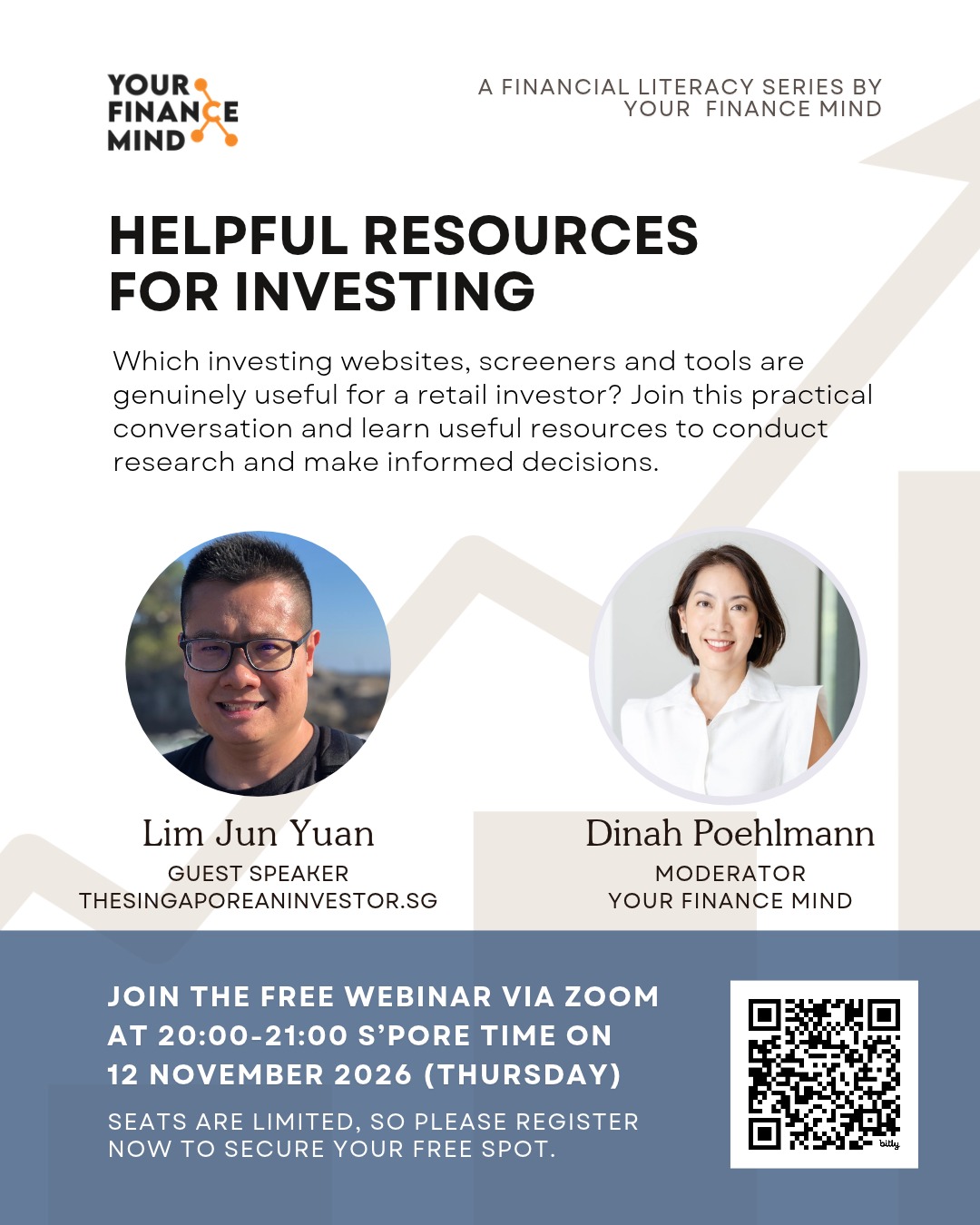
It's been quite some time since I last had a live chit-chat with the investing community, and I’m excited to be back for another session! A big thank you to my friend, Dinah Poehlmann from Your Finance Mind, for inviting me once again!
This time, we’re taking a little break from REITs and exploring some interesting topics surrounding investing, including my go-to investing resources, when is a stock considered 'investable', my thoughts about using AI for stock analysis and trading, and much more.
Whether you're just starting your investing journey or have been investing for years, I hope this session will offer some useful perspectives and practical takeaways that you can apply to your own investing journey.
Best of all, the session is completely FREE to attend! All you need to do is register in advance to receive the Zoom link:
👉 Click here to reserve your spot!
Are You Worried about Not Having Enough Money for Retirement?
You're not alone. According to the OCBC Financial Wellness Index, only 62% of people in their 20s and 56% of people in their 30s are confident that they will have enough money to retire.
But there is still time to take action. One way to ensure that you have a comfortable retirement is to invest in real estate investment trusts (REITs).
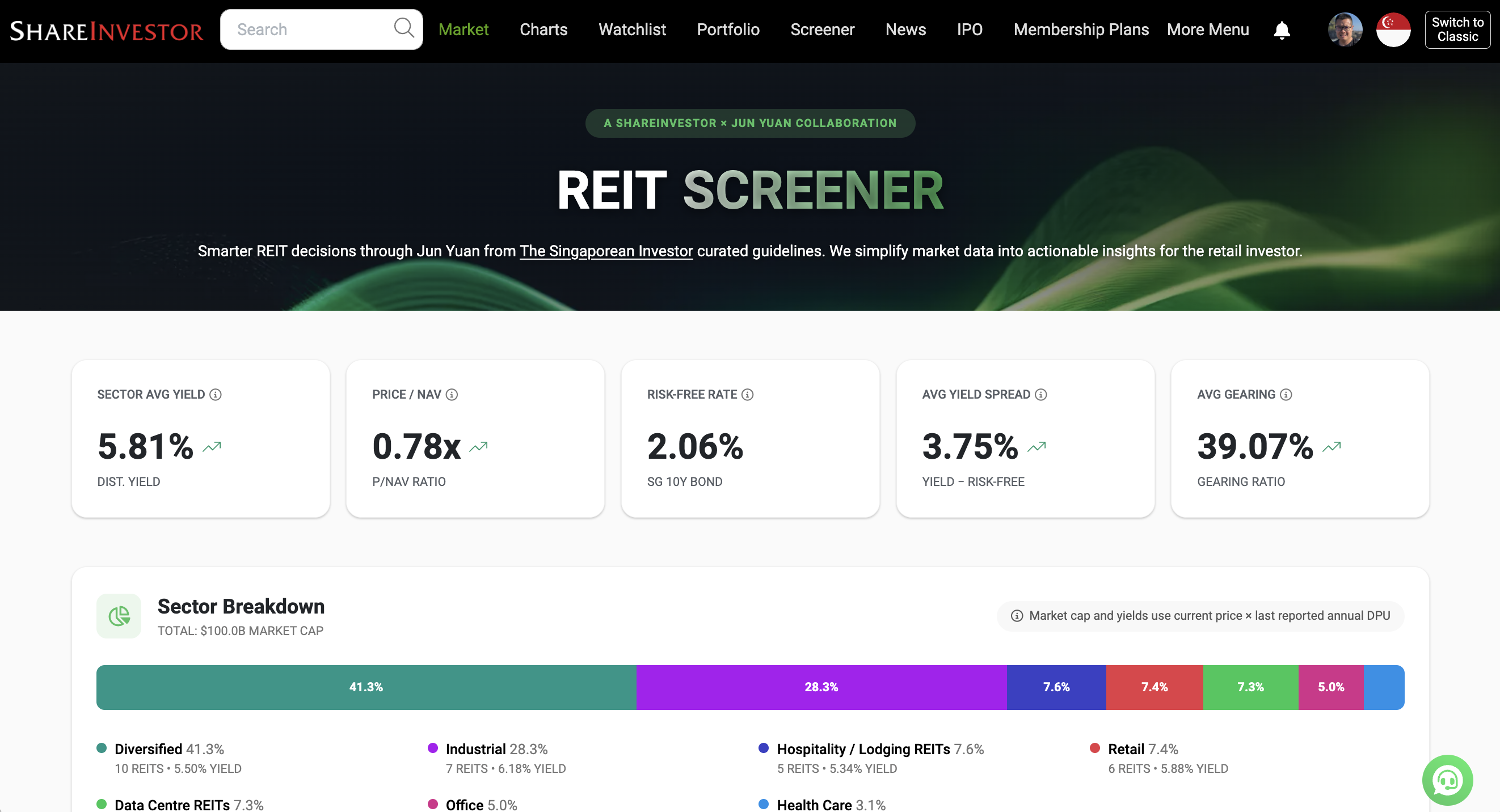
In 'Building Your REIT-irement Portfolio' which I've authored, you will learn everything you need to know to build a successful REIT investment portfolio, including a list of 9 things to look at to determine whether a REIT is worthy of your investment, 1 simple method to help you maximise your returns from your REIT investment, 4 signs of 'red flags' to look out for and what you can do as a shareholder, and more!

You can find out more about the book, and grab your copy (ebook or physical book) here...


Comments (0)